
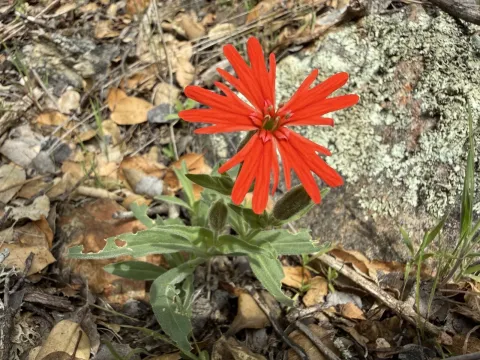
Silene laciniata
Silene laciniata
Silene laciniata, commonly known as the cardinal catchfly, is a perennial herb belonging to the Caryophyllaceae family. It is native to the southwestern United States and Mexico, where it thrives in rocky, sunny habitats such as chaparral and open woodlands. This species is highly valued for its striking, deeply fringed, bright red flowers.
What the section contains
Silene laciniata
Botanically, the cardinal catchfly is characterized by its slender, erect stems that can reach heights of up to 90 centimeters. The foliage is typically lance-shaped and slightly pubescent. The flowers appear in clusters at the top of the stems and are distinctively cleft into four lobes, creating a shredded or laciniate appearance.
Regarding soil requirements, this plant demands excellent drainage. In nature, it grows in gravelly or sandy substrates, which prevents water from pooling around the roots. Gardeners should ensure that the planting site offers a neutral to slightly alkaline pH and full sun exposure to maintain the plant's vigor and bloom intensity.
Agricultural management for this species is relatively low-maintenance once established. It is inherently drought-tolerant, but supplemental watering may be needed during prolonged dry spells to encourage continuous blooming. Mulching with gravel or inorganic material can help keep the root zone cool and free from excessive moisture.
In terms of usage, Silene laciniata is a popular choice for rock gardens, native plant displays, and xeriscapes. It serves as an excellent pollinator plant, frequently visited by hummingbirds and various species of butterflies, making it a functional addition to ecological garden designs.
The cardinal catchfly is susceptible to root rot if grown in heavy, waterlogged soils. Ensuring proper drainage is the primary defense against soil-borne pathogens. In poorly ventilated areas, powdery mildew may develop on the foliage, requiring improved air circulation.
Pest issues usually involve common sap-sucking insects such as aphids, which cluster on tender flower buds. Spider mites can also be problematic in very dry conditions. Gardeners should monitor these populations and apply organic insecticidal soap if an infestation threatens the plant's aesthetic value.