
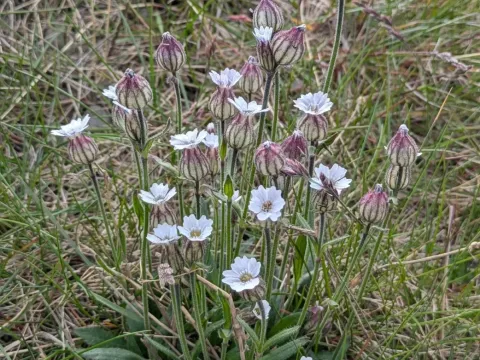
Silene involucrata
Silene involucrata
Silene involucrata, a member of the Caryophyllaceae family, is a perennial herb known for its adaptability to colder climates. It is native to arctic and subarctic regions.
What the section contains
Silene involucrata
For agricultural purposes, sowing is best performed in early spring. The seeds are small and require minimal soil coverage, ideally 1-2 cm deep, to ensure optimal germination and establishment.
The seeding rate should be calibrated to maintain sufficient spacing between plants, which is crucial for air circulation and preventing competition for soil nutrients.
A well-prepared seedbed with a fine-crumb structure is essential. Following sowing, the soil should be lightly rolled to improve moisture retention and seed-to-soil contact.
Early-season weed control is vital as the seedlings are relatively slow to establish during the initial phases of growth, requiring clean soil for successful development.
This species thrives in well-drained, neutral to slightly acidic soils. It is highly sensitive to waterlogging, which often leads to root rot and diminished plant vigor.
Full sun exposure is necessary for the plant to achieve its potential. Even partial shading can result in weak, elongated stems and a reduction in the overall yield.
Soil aeration is a critical agrotechnical factor. Regular cultivation between rows is recommended to break soil crusts and promote healthy root respiration.
Nutrient management focuses on balanced phosphorus and potassium levels. Nitrogen should be used sparingly to avoid excessive leafy growth at the expense of root hardiness.
The plant is frost-hardy, making it suitable for northern regions where growing seasons are short and temperatures fluctuate significantly during early spring.
Common threats include fungal pathogens such as root rot and leaf spots, which are typically exacerbated by high humidity and poor field drainage practices.
Pests like aphids and certain coleopterans may attack the foliage and floral structures. Monitoring during the budding stage is essential to minimize potential damage.
Disease management strategies rely on crop rotation and the removal of botanical debris, which can harbor spores through the winter months.
In cases of severe infestation, integrated pest management (IPM) protocols should be followed, utilizing targeted treatments to preserve beneficial insect populations.
Ensuring adequate distance from other Caryophyllaceae species helps prevent the spread of host-specific diseases, maintaining the overall health of the crop field.