
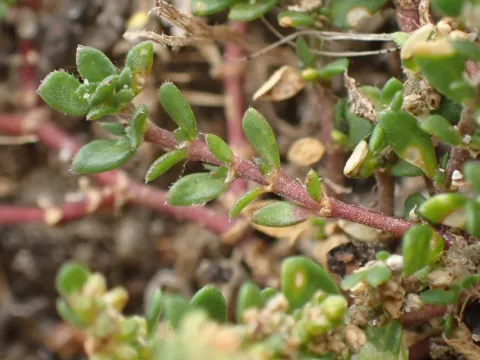
Smooth rupturewort
Herniaria ciliolata
Smooth rupturewort is a perennial species, and sowing is ideally performed in late autumn to benefit from natural overwintering, which breaks seed dormancy.
What the section contains
Smooth rupturewort
The seeds are minute and should be sown on the surface of the soil, barely covered with a fine layer of sand or substrate to ensure proper contact without burial.
If sowing in the spring, seeds must undergo cold stratification in a refrigerator for at least three to four weeks to ensure uniform and successful germination.
Seedbeds must be prepared by removing all debris and weeds, as the slow-growing seedlings are easily outcompeted during their early establishment phase.
Maintain consistent moisture levels during the germination period, using a misting spray to prevent the small seeds from being washed away or buried too deep.
As a member of the Caryophyllaceae family, this plant thrives in open, sunny locations and is perfectly adapted to poor, sandy, or rocky soil compositions.
It demands excellent drainage; waterlogged soils will almost certainly lead to root rot and the loss of the plant population within a very short timeframe.
The plant is highly drought-tolerant and requires very little maintenance once established, making it an excellent candidate for xeriscaping or rock gardens.
It prefers neutral to slightly alkaline soil pH levels, mimicking the natural limestone or sandy habitats where it is natively distributed across Europe.
Spacing should be kept at 15–20 cm between plants to facilitate airflow, which is critical for preventing fungal issues in humid microclimates.
The primary threats to this crop are fungal diseases triggered by high atmospheric humidity and poor ventilation within dense plantings or shaded areas.
Root rot is the most common cause of failure, occurring when irrigation is too frequent or the soil structure lacks the necessary permeability for water.
Pests such as spider mites may become problematic during extended hot and dry spells, necessitating regular inspection of the underside of the foliage.
Weed management is vital throughout the growing season, as competing flora can significantly decrease the vitality and yield of the harvestable material.
Preventative measures include avoiding overhead irrigation and ensuring that plants are not overcrowded, which helps maintain a dry surface environment.
Harvesting is typically carried out at the peak of the flowering stage, ensuring that the plant's metabolic activity produces the highest levels of saponins.
The stems should be cut using sharp, clean shears, ensuring that the root crown remains intact to allow the plant to regenerate for subsequent growing seasons.
Drying must be conducted in the shade in a well-ventilated location to prevent the loss of active medicinal compounds and to preserve the green pigment of the leaves.
Once dried, the herb should be brittle to the touch; it is then processed into the desired form for storage in airtight containers to prevent moisture absorption.
Proper storage is essential; containers should be kept in a cool, dark room away from direct heat sources to extend the shelf life of the dried botanical material.