
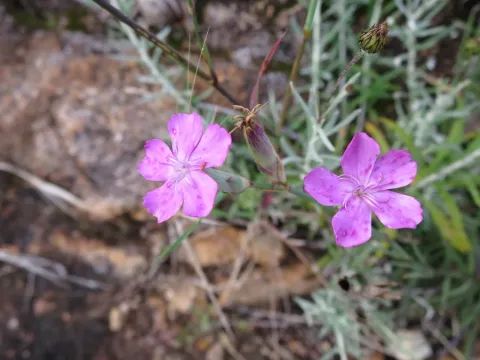
Sintra carnation
Dianthus cintranus
The Sintra carnation (Dianthus cintranus) is a perennial herbaceous plant belonging to the Caryophyllaceae family. This species is notably found in specific habitats in Portugal, characterized by its resilient nature and adaptability to rocky environments.
What the section contains
Sintra carnation
Cultivation requires well-draining, sandy, or stony soil to mimic its natural conditions. It thrives in soils with neutral to alkaline pH levels, and it is essential to ensure that the ground does not retain excessive moisture, which could cause root rot.
Full sun exposure is a non-negotiable requirement for this species. Without sufficient light, the plant tends to lose its compact, mounded shape and exhibits poor blooming performance during the growing season.
Climate adaptability is a strong suit of this plant, as it is naturally suited for Mediterranean-like environments with mild winters. In garden settings, it handles warm temperatures well but requires excellent air circulation to avoid fungal issues.
In terms of practical use, the Sintra carnation is an excellent candidate for rock gardens, gravel beds, and slopes where soil drainage is naturally efficient. Its compact foliage makes it a versatile groundcover for decorative garden sections.
The primary threats to this plant are fungal pathogens such as rust and root rot, which are triggered by poor air circulation or high humidity around the crown. These diseases can quickly weaken the plant's vascular system.
Insects like aphids and spider mites are common pests that frequent the plant. They feed on the tender tissues, often leading to stunted growth and discolored leaves, which significantly reduces the aesthetic appeal of the flower beds.
To mitigate the risk of disease, it is recommended to maintain a dry mulch layer and avoid overhead watering. This keeps the foliage and crown area dry, reducing the conditions favorable for spore germination.
Chemical control involving systemic fungicides and acaricides should be used only as a last resort. Integrated pest management strategies, such as physical removal of pests or introducing beneficial insects, are highly preferred.
Proper hygiene, such as clearing fallen debris and pruning overgrown parts, ensures that the plants remain vigorous and less susceptible to the aforementioned pests and diseases throughout the year.