
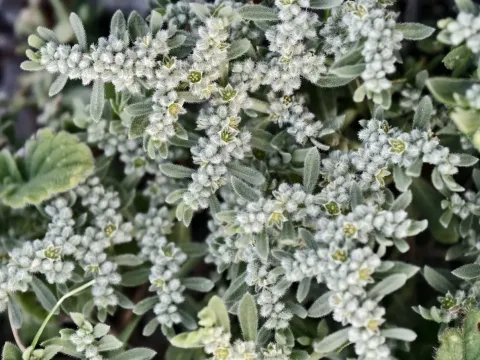
Grey rupturewort
Herniaria incana
Herniaria incana, commonly known as grey rupturewort, is a perennial herbaceous plant from the Caryophyllaceae family. It is distinguished by its fine, greyish pubescence that covers its stems and small, opposite leaves, giving it a silver-like appearance.
What the section contains
Grey rupturewort
The native range of this species extends across Southern and Central Europe, the Caucasus, and parts of Asia Minor. It typically inhabits dry, sandy, or rocky grasslands, thriving in environments where other plants might struggle to survive.
For successful cultivation, the plant requires full sun exposure and well-drained, nutrient-poor soil. It is highly drought-tolerant, making it an excellent candidate for xeriscaping or cultivation in dry climates where irrigation is limited.
Agronomic practices for Herniaria incana involve minimal soil preparation, focusing on ensuring the soil is not prone to waterlogging. It is generally low-maintenance, requiring only occasional weeding during its establishment period.
The plant is valued in ethnopharmacology for its potent diuretic and anti-inflammatory properties. It has been used historically to support kidney function and to treat various urological conditions, which makes it a crop of interest for herbal medicine production.
The primary threats to this culture are fungal pathogens, specifically those that flourish in humid conditions. Root rot is a significant concern if the soil drainage is inadequate or if the site has poor air circulation.
Pests such as aphids and spider mites can occasionally affect the foliage, particularly during extended dry spells. Monitoring for insect activity in the early vegetative stage is crucial for ensuring healthy growth and biomass production.
Preventative measures include choosing sites with excellent airflow and avoiding the over-application of fertilizers, which can make the plants more susceptible to pest colonization and disease development.
In case of pest outbreaks, it is recommended to prioritize organic control methods or biological agents to maintain the quality of the raw medicinal material. Chemical interventions should be strictly controlled.
Regular sanitation of the field, including the removal of dead plant material and debris, significantly reduces the likelihood of overwintering pathogens that could threaten future harvests.