
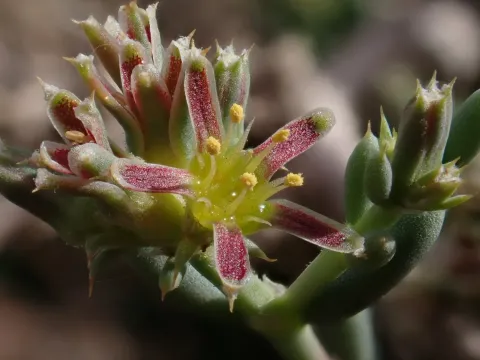
Gymnocarpos
Gymnocarpos
Gymnocarpos is a genus of perennial subshrubs or shrubs belonging to the Caryophyllaceae family. These plants are uniquely adapted to arid environments, naturally occurring in the desert regions of North Africa, the Middle East, and parts of Central Asia.
What the section contains

Gymnocarpos
Botanically, these plants are defined by their woody, rigid stems and succulent-like leaves designed to minimize water loss. Their root systems are highly specialized, often penetrating deep into rocky or sandy soils to tap into limited moisture reserves.
For successful cultivation, Gymnocarpos requires soil with excellent drainage properties. Any soil type that encourages water stagnation will cause immediate stress to the root system, often leading to mortality due to root rot.
The plant thrives in regions with high solar radiation and low relative humidity. It is highly tolerant of alkaline and saline soils, making it an interesting candidate for reclaiming degraded lands in arid climates.
Economically, Gymnocarpos is evaluated for its potential in desert livestock grazing, soil stabilization against wind erosion, and for the chemical compounds found in its tissues that may have pharmaceutical applications.
The primary threat to the health of Gymnocarpos is root rot, typically caused by poor soil drainage and waterlogging. Excessive moisture in the root zone is the most significant limiting factor for plant longevity.
Aphid infestations represent the main biological pest pressure, particularly affecting young foliage and tender shoots during the active growth phase. These pests weaken the plant, making it susceptible to secondary infections.
Locusts and other orthopteran insects can cause severe defoliation in regions where the plant grows naturally. This impact is especially detrimental to young plantations that have not yet reached full maturity.
Bacterial wilt may occur in instances where soil aeration is insufficient. Signs include discoloration of stems and wilting of the terminal parts, which necessitates the removal of affected biomass to prevent further spread.
Inappropriate spacing of plants can exacerbate the prevalence of pathogens, as stagnant air between branches creates a microclimate conducive to mold growth. Proper field management is essential to mitigate these botanical hazards.