
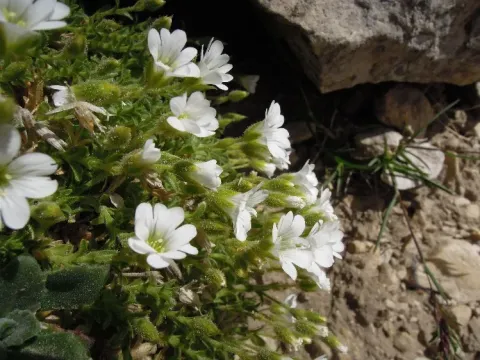
Cerastium thomasii
Cerastium thomasii
Cerastium thomasii is a perennial herbaceous species belonging to the Caryophyllaceae family. Known for its adaptability, this plant thrives in alpine environments, typically colonizing rocky slopes and high-altitude terrains.
What the section contains
Cerastium thomasii
The botanical structure of the plant features silver-toned foliage covered in fine hairs. This pubescence serves as a morphological adaptation to minimize transpiration and protect the plant from harsh, direct UV radiation in mountain habitats.
Regarding soil requirements, Cerastium thomasii demands exceptional drainage. In agricultural and horticultural settings, it performs best in gritty, stony, or sandy substrates that prevent moisture accumulation around the crown.
Climate preferences include high light intensity and moderate temperature ranges. It is a highly frost-tolerant species that requires open, sunny locations to maintain its dense, cushion-like growth habit.
Cultivation practices should emphasize moderate watering. Over-fertilization is generally discouraged, as nutrient-rich soils can cause the plant to lose its compact, low-spreading form and become prone to lodging.
Root rot is the primary threat to Cerastium thomasii, typically triggered by stagnant water and poor soil aeration, particularly during the dormant season.
Powdery mildew is a common fungal challenge if the plant is grown in areas with poor airflow or high relative humidity, which compromises the aesthetics of the leaves.
Pests such as aphids and spider mites may occasionally infest the plants during prolonged heatwaves, necessitating careful monitoring of the leaf undersides.
Cultural control is the most effective strategy. By ensuring the plant is situated in a location with high air circulation and rapid water drainage, the incidence of disease is significantly reduced.
If chemical intervention becomes necessary, fungicides and insecticides labeled for rock garden species should be applied according to local agricultural safety guidelines.