
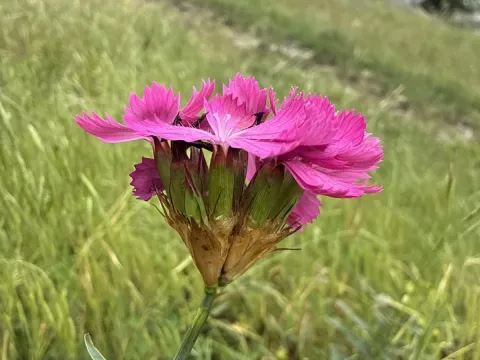
Clusterhead pink
Dianthus capitatus
Sowing of Dianthus capitatus is typically performed in early spring once soil temperatures have stabilized sufficiently for germination.
What the section contains
Clusterhead pink
Seeds are small and should be sown at a shallow depth of approximately 0.5 to 1 centimeter to ensure adequate access to light and moisture.
For commercial production, precision seeding methods are recommended to maintain consistent plant spacing and minimize the need for manual thinning.
Starting seeds in climate-controlled greenhouse environments can significantly improve survival rates for young seedlings before they are transplanted.
Adequate soil moisture must be maintained during the initial germination phase, as the seeds are highly sensitive to complete desiccation.
Clusterhead pink is a member of the Caryophyllaceae family that thrives best in full sun exposure with at least six hours of direct light daily.
The plant requires well-draining soil, specifically preferring sandy or loamy textures to prevent waterlogging and subsequent root rot issues.
This species exhibits remarkable drought tolerance, making it an excellent candidate for low-maintenance landscaping and sustainable xeriscaping.
A neutral to slightly alkaline soil pH is optimal; applying agricultural lime can help rectify overly acidic conditions for better nutrient uptake.
Proper spacing is essential to ensure good air circulation, which is a key factor in preventing the spread of moisture-related fungal diseases.
Productivity is primarily measured by the number of flowering heads produced per plant during the active growing season.
With optimal fertilization and weed management, a single plant can produce a high density of blossoms, maximizing the output per hectare.
Seed yield varies depending on environmental conditions but is generally robust, provided that harvesting occurs before natural seed dispersal.
Regular deadheading of spent blooms encourages secondary flushes of flowers, thereby extending the total harvest window significantly.
Yield stability is maintained by ensuring plants have access to adequate potassium and phosphorus levels throughout the bud-setting phase.
Fungal infections, such as rust and leaf spot, are the primary threats, particularly in environments with poor ventilation or high humidity levels.
Aphids and spider mites are common pests that may infest the foliage, necessitating timely monitoring and targeted integrated pest management.
Root system health is susceptible to soil-borne pathogens if drainage is compromised, which highlights the importance of site selection.
Early detection of pest populations allows for spot-treatment strategies, which reduce the overall need for broad-spectrum chemical applications.
- Monitoring for pest infestations.
- Applying fungicides preventatively.
- Maintaining soil drainage.
Flowers intended for decorative use should be harvested when the buds show color but are not yet fully open to ensure maximum vase life.
Early morning harvesting is preferred as it minimizes transpirational water loss and preserves the turgidity of the stems after cutting.
For seed collection, the capsules must be allowed to mature fully on the stems until they turn brown and begin to split naturally.
Post-harvest handling involves placing stems in clean water with a floral preservative to maintain turgor and suppress microbial growth.
Proper storage in a cool, shaded environment immediately after harvest is critical for maintaining high commercial quality for market distribution.