
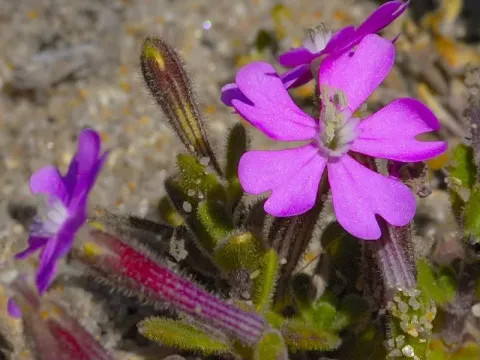
Coastal catchfly
Silene littorea
Coastal catchfly (Silene littorea) is an annual herbaceous plant belonging to the Caryophyllaceae family. Its natural distribution is primarily confined to the sandy coastal regions of the Western Mediterranean, where it has evolved to thrive in harsh maritime environments.
What the section contains
Coastal catchfly
The plant features distinct botanical characteristics, including stems covered in glandular hairs and narrow leaves. These features are adaptations to high-salinity and high-light environments, allowing the plant to regulate moisture loss efficiently during the active growing season.
For successful cultivation, the soil must be light, sandy, and possess exceptional drainage capabilities. Like many coastal species, Silene littorea struggles in dense, water-retentive clay soils, which can lead to rapid root decline and overall plant failure.
Optimal growth is achieved only in full sun conditions. Providing sufficient solar radiation is essential, as the species is highly sensitive to shading, which causes weak stem development and inhibits the proliferation of its characteristic colorful flowers.
In ornamental horticulture, the coastal catchfly is utilized for its resilience and unique aesthetic appeal in rock gardens and Mediterranean-style landscapes. It serves as an excellent choice for stabilizing loose, sandy soil in areas where other ornamental species might struggle.
The most significant threat to Silene littorea is root rot caused by poor soil drainage and stagnant water. During wet or humid spells, it is crucial to ensure that the substrate remains airy and that the root zone does not become waterlogged.
Insect pests, such as aphids, can occasionally infest the growing tips of the plant during the spring. Monitoring is key to prevention, and using organic pesticides or mechanical removal is usually sufficient to manage these infestations without harming the plant's delicate structure.