
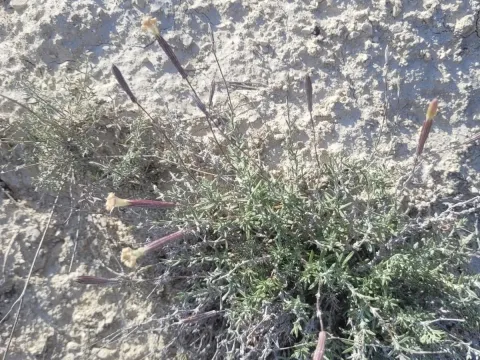
Chalk catchfly
Silene cretacea
The chalk catchfly (Silene cretacea) is a perennial herbaceous plant belonging to the Caryophyllaceae family. This species is an obligate calciphile, which means it requires high calcium concentrations in the soil to survive and thrive throughout its growth cycle.
What the section contains
Chalk catchfly
The natural range of this species is confined to specific chalk outcrops found across Eastern European landscapes. These geological formations provide the unique, mineral-rich, and skeletal soil structure necessary for the plant to compete effectively against other dominant meadow species.
To successfully cultivate or conserve this plant, it is essential to replicate its natural environment. It requires excellent drainage, high sun exposure, and low nutrient availability, as the plant is highly evolved to inhabit sites where most agricultural crops would face severe nutrient deficiencies.
Its botanical structure reflects its adaptation to harsh environments, featuring a sturdy taproot system designed to anchor the plant in unstable chalk scree. This anatomical feature enables the plant to access deep water reservoirs and endure the prolonged droughts characteristic of exposed hillslopes.
Currently, the species holds no agricultural utility as a crop, serving instead as a vital component of endangered ecosystem conservation programs. Research on Silene cretacea focuses on ecological preservation and understanding the evolutionary mechanisms that allow it to colonize challenging calcareous substrates.