
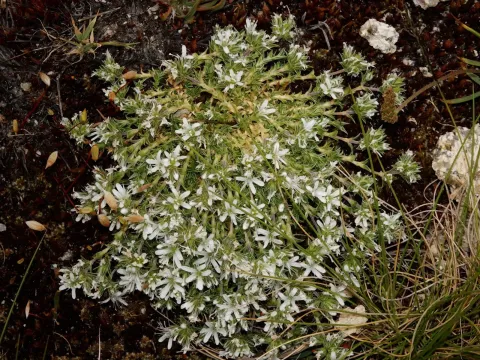
Arenaria querioides
Arenaria querioides
Arenaria querioides is a herbaceous perennial plant belonging to the Caryophyllaceae family. Known for its adaptability, this species is often appreciated for its ability to thrive in specific environmental niches, making it a unique candidate for controlled cultivation and ecological projects.
What the section contains
Arenaria querioides
The plant requires well-drained, sandy or gravelly soil conditions to perform optimally. It is particularly sensitive to soil compaction and moisture saturation, which necessitates a growing environment that prioritizes drainage and aeration of the root zone.
As a light-loving species, it thrives in open, sunny habitats. Adequate light exposure is essential for maintaining the plant's characteristic compact habit and promoting healthy flowering cycles, which are sensitive to light intensity levels.
Climatic requirements involve moderate precipitation with periods of dryness. Arenaria querioides shows natural resilience against intermittent drought, allowing it to survive in environments where water availability may be inconsistent or limited.
In agricultural and landscaping contexts, it is primarily utilized as a ground cover or for rocky landscape restoration. Its ability to tolerate nutrient-poor substrates allows it to be used in areas where more demanding crops would fail to establish, contributing to soil stability.
Root rot caused by overwatering or poorly drained soil is the most significant threat to the survival of Arenaria querioides. Maintaining a strict irrigation schedule is essential to preventing fungal proliferation in the root system.
Fungal leaf spots can occur during periods of high humidity or poor ventilation. Implementing spacing protocols during planting is a primary preventative measure to ensure adequate air movement around the plant foliage.
Soil-dwelling pests can damage the delicate root structures of young seedlings. Monitoring the substrate and using sustainable pest management strategies are recommended to protect the integrity of the plant during the early growth stages.
Weed encroachment is a major challenge, particularly during the establishment phase. Weeds compete for essential resources such as space and light, necessitating frequent weeding to ensure the plant can form a dense mat successfully.
Nematode infestations can occur under conditions of continuous monoculture. Rotating the planting site or using soil sterilization techniques before establishing a new crop helps to mitigate the risk of long-term soil-borne disease pressure.