
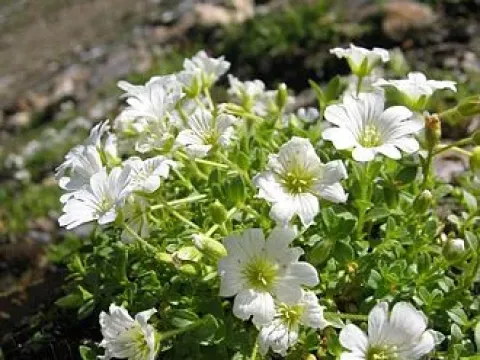
Atlantic mouse-ear
Cerastium atlanticum
The Atlantic mouse-ear (Cerastium atlanticum) is a perennial herbaceous plant belonging to the Caryophyllaceae family. Native to the mountainous regions of the Mediterranean and North Africa, it is well-adapted to high-altitude environments.
What the section contains
Atlantic mouse-ear
Botanically, it is characterized by its prostrate, mat-forming growth habit. The leaves are small and covered in fine silver-grey hairs, which serve as an evolutionary adaptation to reflect excess sunlight and prevent moisture loss.
The species requires soil with excellent drainage, such as sandy or gravelly compositions. It cannot tolerate heavy, water-logged soils, which frequently cause root decay and plant mortality in unsuitable sites.
Regarding environmental conditions, it demands full sun exposure to thrive. Its structural integrity and distinctive silvery appearance are maintained best when the plant is exposed to bright, unobstructed sunlight throughout the growing season.
Cultural management is low-intensity. It is highly resistant to drought and requires little to no supplemental fertilization, as excess nutrients often result in leggy, unattractive foliage that loses its dense, ground-hugging form.
Propagation is primarily achieved via seed sowing or stem division. Sowing should be performed in early spring, ideally when temperatures remain consistently above 12°C, ensuring the medium remains porous and light.
The primary threats include fungal pathogens such as root rot or Botrytis, particularly in high-humidity or poorly ventilated conditions. Ensuring proper spacing and airflow between plants is essential for maintaining health.