
Arenaria pungens
Arenaria pungens
Description
Growing requirements
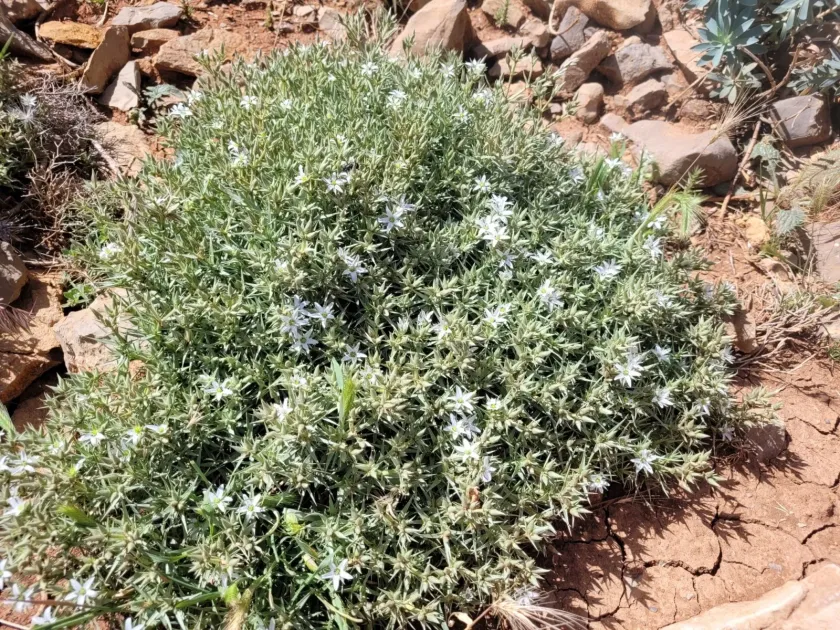
Arenaria pungens is a perennial herbaceous plant belonging to the Caryophyllaceae family. It is naturally found in mountainous regions, where it thrives in rocky habitats and alpine environments characterized by harsh climatic conditions.
The plant is known for its dense, cushion-like growth habit. Its foliage consists of stiff, needle-like leaves that give it a distinct prickly appearance, which is essential for minimizing transpiration and enduring strong winds in its native habitat.
Cultivation of Arenaria pungens requires full sun exposure and extremely well-drained soil. The plant is perfectly adapted to nutrient-poor soils and will struggle in overly rich or compost-heavy substrates, which can lead to rapid, weak growth.
It is essential to provide excellent drainage for this species. In garden settings, it is best suited for rock gardens, crevice plantings, or stone walls where water can move away from the crown of the plant quickly after precipitation.
The primary horticultural use of this plant is as an ornamental groundcover for alpine garden designs. It is highly valued for its aesthetic appeal, compact size, and ability to form resilient mats that bloom with delicate flowers during the growing season.
Main diseases and pests
The main threat to Arenaria pungens is fungal disease, particularly root rot, which occurs in conditions of excessive soil moisture or poor drainage. Protecting the crown from constant dampness is vital for plant survival.
While relatively pest-free, this plant can occasionally attract aphids or spider mites during periods of extreme heat or drought. Regular monitoring and targeted applications of suitable pesticides can easily manage these infestations.
Weed management is a crucial cultural task, as the plant is slow-growing and can easily be outcompeted by more aggressive species. Careful hand-weeding is recommended to avoid damaging the delicate root systems of the sandwort.
To prevent disease, avoid overhead watering, which can trap moisture within the cushion. Drip irrigation or careful watering at the base of the plant is preferable to keep the foliage dry and healthy throughout the year.
Winter damage is also possible in wet climates, where moisture-soaked tissues can freeze and die. Using a layer of grit or fine gravel around the plant base acts as a protective barrier against cold, wet soil and prevents rot.