
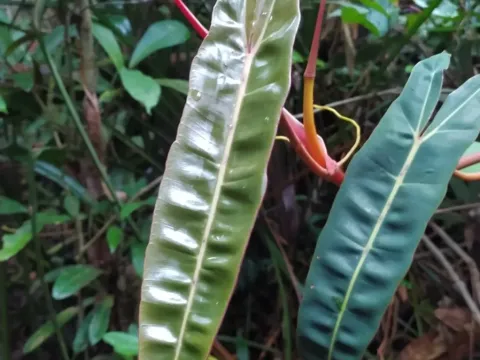
Philodendron billietiae
Philodendron billietiae
Philodendron billietiae is a stunning epiphytic plant belonging to the Araceae family. Originating from the tropical rainforests of French Guiana and parts of Brazil, it is highly prized for its unique, elongated leaves and vibrant orange-yellow petioles.
What the section contains
Philodendron billietiae
The plant is categorized as a hemiepiphyte, meaning it can grow on trees or on the forest floor, depending on environmental conditions. Its lanceolate leaves can grow significantly large, reaching up to 90 cm in length under optimal indoor conditions.
Success in cultivating this species depends on mimicking its natural humid habitat. It thrives in temperatures ranging from 18°C to 28°C and requires high ambient humidity, ideally maintained above 60% through humidifiers or regular misting.
The growing medium must be highly porous. A typical potting mix for this plant includes orchid bark, perlite, sphagnum moss, and high-quality peat, ensuring the roots have access to both aeration and moisture without the risk of rotting.
Bright, indirect light is essential to maintain the structural integrity and deep green color of the leaves. Direct, intense sunlight should be avoided as it can cause chlorophyll degradation and severe leaf scorching.
Common pests affecting Philodendron billietiae include spider mites, mealybugs, and scale insects. These pests often congregate on the undersides of leaves and at the base of the petioles, requiring frequent monitoring.
Root rot is the most common physiological disorder caused by overwatering or poorly draining soil. To prevent this, ensure that the substrate is well-aerated and never allow the pot to sit in standing water for extended periods.
Fungal leaf spot diseases may occur in environments with poor air circulation and excessive dampness. Improving airflow and removing infected leaf areas can help curb the spread of the pathogen.
Thrips can also infest the foliage, leaving tiny streaks or discolored patches on the leaves. Systematic insecticides or neem oil are typically effective for localized control of these small pests.
Maintaining a clean cultivation area and isolating new plants are fundamental practices for preventing the spread of diseases. Regular inspection of the plant's health ensures a robust and long-living specimen.