
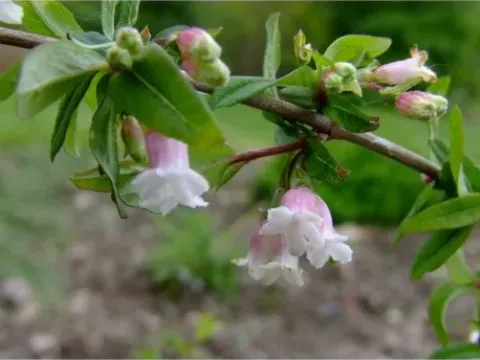
Myrtle-leaved honeysuckle
Lonicera myrtilloides
Myrtle-leaved honeysuckle (Lonicera myrtilloides) is a perennial shrub belonging to the Caprifoliaceae family. It is distinguished by its small, dense foliage and compact growth habit, making it an excellent candidate for ornamental gardening.
What the section contains
Myrtle-leaved honeysuckle
Originating from East Asia, this species is naturally adapted to mountain slopes and temperate climates. This inherent hardiness allows it to thrive in various garden environments with moderate seasonal variations.
The plant requires well-drained, fertile soil to achieve optimal growth. It is essential to avoid waterlogged conditions, as the root system is sensitive to poor drainage and prolonged saturation, which can lead to root rot.
In terms of agricultural management, the species prefers sunny locations but shows significant tolerance to partial shade. Regular pruning is recommended to maintain its desired shape, as the plant responds well to shearing.
Its primary economic and practical use is in the horticultural sector. It is widely employed in landscaping for low hedges, topiary projects, and as a structural element in shrub borders due to its tidy appearance.
Common pests that affect this species include aphids and leaf-rolling insects. These pests primarily target fresh, succulent growth during the spring, which may necessitate integrated pest management strategies.
Powdery mildew represents the most significant pathological threat to this honeysuckle. To prevent outbreaks, it is crucial to ensure proper plant spacing and airflow throughout the canopy to reduce humidity levels around the foliage.