
Pyrenean honeysuckle
Lonicera pyrenaica
Description
Growing requirements
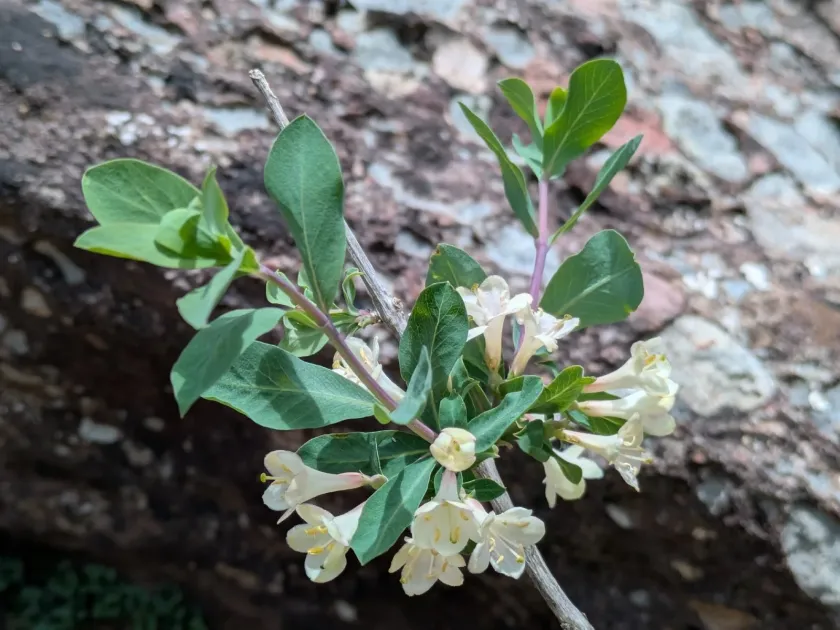
Pyrenean honeysuckle (Lonicera pyrenaica) is a deciduous shrub belonging to the Caprifoliaceae family. Native to the mountainous regions of the Pyrenees, it is prized for its ornamental value and compact growth habit, usually reaching 1 to 1.5 meters in height.
The plant features slender, intricately branched stems adorned with glaucous-green leaves. Its specific botanical structure allows it to thrive in rocky and limestone-rich habitats, which is a defining characteristic of this particular species.
Optimal growth requires a site with full sun to partial shade. Exposure to sunlight is crucial for maintaining the plant's density and promoting abundant flowering throughout the season, which is a key trait of the species.
Soil requirements focus on alkalinity and drainage. Pyrenean honeysuckle excels in well-drained limestone soils. It is essential to ensure that the site does not hold excess moisture, as stagnant water can lead to root system decay and poor plant vigor.
Care practices include periodic pruning to maintain shape and the removal of dead or damaged wood. While generally hardy, the species benefits from protection against harsh winter winds in colder regions to prevent dieback of the sensitive younger branches.
Main diseases and pests
The primary concern for Lonicera pyrenaica is powdery mildew, which can develop during humid weather conditions. Maintaining adequate airflow through proper spacing between plants helps to mitigate this risk significantly.
Pests such as aphids and leaf rollers may occasionally infest the foliage. Monitoring the plant during the early growth stage allows for prompt action, such as applying mild horticultural soaps or targeted insecticidal sprays.