
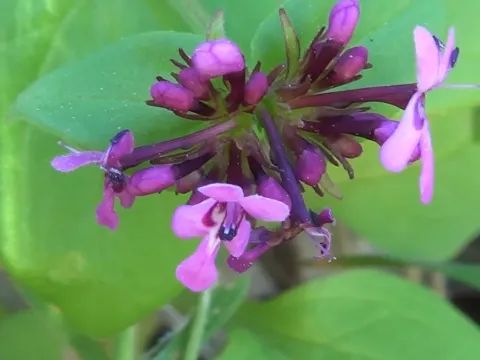
Fedia
Fedia
Fedia, scientifically known as Fedia cornucopiae, belongs to the Caprifoliaceae family. It is a succulent annual plant native to the Mediterranean region, where it has historically been gathered and cultivated as a nutritious leafy green vegetable.
What the section contains


Fedia
The sowing period for fedia typically begins in early spring, once the soil has warmed up to at least 8–10 degrees Celsius. In regions with milder climates, late autumn sowing is also possible to ensure early spring harvests.
Seeds should be sown at a depth of approximately 1–2 centimeters. Row spacing of about 20–25 centimeters is recommended to provide sufficient space for the development of individual leaf rosettes and to allow for easy mechanical or manual weeding.
Germination is generally reliable if the soil moisture is maintained at a consistent level. Seedlings usually emerge within 10 to 14 days, depending on soil temperature and the specific moisture conditions of the seedbed.
To maximize success, growers should ensure a weed-free seedbed. Young plants develop relatively slowly in the first few weeks, making them susceptible to competition from fast-growing weeds during the early establishment phase.
Fedia thrives in well-drained, fertile soils with a neutral pH. While it can adapt to various soil types, loamy soils rich in organic matter are ideal for promoting succulent leaf growth and strong root development.
The plant prefers sunny locations, which are essential for its vegetative growth. Exposure to direct sunlight helps maintain the characteristic flavor and nutritional density of the leaves, though it can also grow in partial shade.
Optimal growth occurs at temperatures between 15 and 22 degrees Celsius. Being a cool-season crop, it is hardy enough to withstand light spring frosts, but prolonged exposure to freezing temperatures may slow down its development.
Consistent moisture is key to producing high-quality yields. Irrigation should be frequent enough to keep the root zone slightly moist, especially during dry spells, as drought stress will force the plant to bolt prematurely.
Nutrient management involves applying balanced fertilizers during the early vegetative stage. Excessive nitrogen should be avoided as it can affect the shelf life and flavor of the leaves, potentially making the plant more prone to pest attacks.
Fedia is generally a resilient plant, but it can be affected by standard garden pests like aphids and slugs. Aphids tend to congregate on the underside of young leaves, which can stunt plant growth and reduce overall market quality.
Slugs and snails are particularly problematic for young seedlings. Regular monitoring and physical barriers, or organic baiting, are effective management strategies to protect the crop during its most vulnerable early development stage.
Fungal diseases related to high humidity, such as powdery mildew or damping-off, can occur if there is poor air circulation or over-irrigation. Proper row spacing and choosing well-drained sites significantly reduce these risks.
Root rots can be a threat in waterlogged soils. It is crucial to ensure that the site has adequate drainage to prevent standing water, as the plant's roots are highly sensitive to oxygen deprivation caused by saturated conditions.
Integrated Pest Management (IPM) practices, including crop rotation and the use of healthy, disease-free seed, are recommended to minimize the impact of pests and pathogens throughout the growing season.
Harvesting is typically carried out when the plants reach full vegetative development but before the onset of flowering. The window for peak harvest is usually 40 to 60 days after sowing, depending on the environmental conditions.
Plants are harvested by cutting the entire rosette at the base. Alternatively, individual outer leaves can be harvested over time, allowing the central part of the plant to continue growing, which is useful for small-scale kitchen gardens.
Post-harvest handling is critical for maintaining quality. The leaves should be cooled immediately after harvest to remove field heat, as this significantly extends their shelf life and preserves their crisp texture.
Once the plant begins to transition to its reproductive phase (bolting), the leaves become tougher and often develop a bitter taste. For commercial purposes, timing the harvest before this shift is essential to meet quality standards.
- Determining the stage of peak physiological maturity.
- Post-harvest cooling techniques for fresh greens.
- Managing the harvest to maximize secondary growth.