
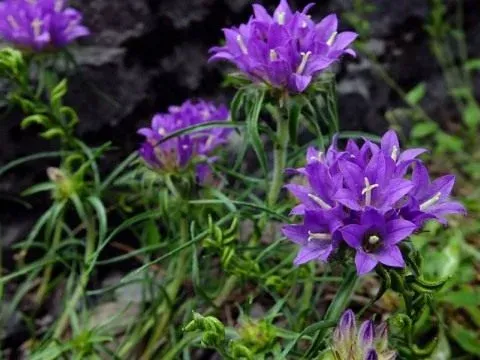
Edraianthus parnassicus
Edraianthus parnassicus
Edraianthus parnassicus is a perennial herbaceous plant belonging to the Campanulaceae family. Native to the mountainous regions of Greece, this plant has adapted to survive in harsh rocky environments, specifically within rock crevices and screes.
What the section contains
Edraianthus parnassicus
Botanically, it is characterized by dense, tufted rosettes of narrow leaves. During the blooming season, it produces showy, bell-shaped violet-blue flowers that sit low among the foliage, making it a distinctive feature of alpine flora.
To successfully cultivate this species, growers must provide extremely well-draining soil, preferably of an alkaline or neutral pH. It thrives in poor, gritty substrates that mimic the natural conditions of its mountain habitat, preventing root rot.
The plant demands full sunlight to maintain its compact growth habit and prolific flowering. In shaded conditions, the plant tends to become leggy and loses its aesthetic appeal, making it unsuitable for areas with low light exposure.
This species is highly prized in horticultural settings, particularly in rock gardens, troughs, and alpine houses. Its ability to grow in tight spaces between stones makes it a staple for collectors of alpine and saxatile plants.
The primary threat to the health of Edraianthus parnassicus is fungal infection, typically caused by excess moisture or poor aeration of the root zone. Ensuring a dry neck is essential for plant survival.
Gastropods, such as slugs and snails, represent a significant risk, especially during the spring when tender new growth emerges. Mechanical barriers or appropriate molluscicides are recommended for effective management.
Poor soil drainage during winter months often leads to rot, which is the most common cause of plant death. Utilizing gravel mulch around the crown helps prevent direct contact between the foliage and damp soil.
Overcrowding can restrict airflow, increasing the risk of foliage diseases. Maintaining adequate spacing between individual plants is necessary to promote better evaporation and reduce the incidence of dampness-related issues.
Regular maintenance, including the removal of dead foliage and monitoring for signs of stress, is critical for the long-term success of the plant in a garden setting. Healthy plants in optimal conditions are much more resistant to pathogens.