
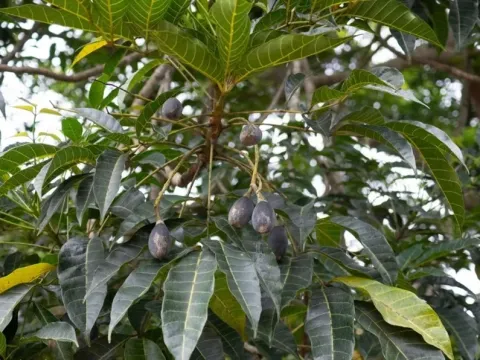
Canarium pimela
Canarium pimela
Canarium pimela is an evergreen tree belonging to the Burseraceae family. It is native to the tropical and subtropical forest regions of Southeast Asia, including southern China and Vietnam.
What the section contains
Canarium pimela
The tree thrives in warm, humid climates and is highly sensitive to frost. Consequently, its cultivation is largely restricted to tropical and sub-tropical zones where temperatures remain stable throughout the year.
Deep, fertile, and well-drained soils are essential for healthy growth. Waterlogging must be avoided, as it can lead to root rot and other fatal complications for the plant.
Adequate sunlight exposure is critical for crown development and flower initiation. Trees should be planted in locations that allow for good airflow to reduce humidity-related fungal risks.
Agronomic practices include consistent fertilization, particularly during the juvenile stage, and proper mulching to maintain soil moisture levels during the dry season.
The economic value of Canarium pimela is centered on its fruit, which contains high-quality oil and edible kernels. It serves as a vital resource for local economies in its native range.
Yield capacity is influenced by tree maturity and the intensity of orchard management. Healthy, mature trees are capable of producing consistent annual harvests under optimal conditions.
The oil extracted from the fruit is utilized in both the culinary and cosmetic industries. Its nutritional profile makes it a sought-after commodity in regional markets.
Apart from fruit production, the wood of the tree is recognized for its durability and resistance to harsh environmental conditions, making it useful for construction and carpentry.
Modern breeding programs focus on improving fruit size, oil content, and tree resistance to environmental stress to increase the profitability of Canarium plantations.
Fungal diseases affecting the root system are the primary threats, especially when drainage management is neglected in areas with high rainfall.
Various insect pests, such as weevils and specialized caterpillars, can damage foliage and developing fruit, directly impacting the marketable output of the trees.
Effective management includes routine pruning to remove deadwood and improve canopy aeration, which serves as a biological deterrent against moisture-loving fungal pathogens.
Integrated Pest Management (IPM) strategies are recommended to minimize chemical input, preserving the health of the orchard ecosystem and reducing production costs.
Strict phytosanitary protocols are necessary when introducing new saplings to prevent the spread of soil-borne pathogens across a plantation.
Harvesting takes place when the fruit reaches biological maturity, often characterized by specific skin coloration and the softening of the fruit pulp.
Careful handling is required during manual harvest to prevent physical damage to the fruit, as bruised fruit is susceptible to rapid post-harvest degradation.
Post-harvest processing involves sorting, cleaning, and separating the pulp from the seed. This phase is crucial for ensuring the high quality required for oil extraction.
Proper storage facilities are essential to maintain the quality of the harvested produce. Controlling temperature and ventilation prevents premature spoilage before processing.
As the commercial demand for Canarium products grows, the transition to mechanized harvesting tools is becoming more common to enhance efficiency and reduce labor requirements.