
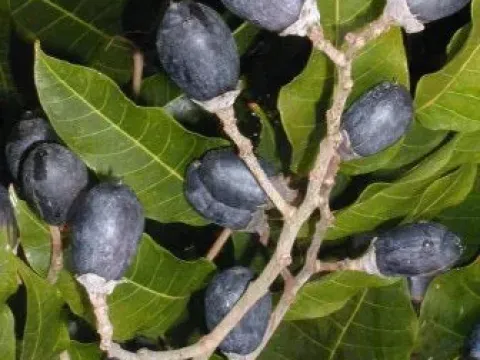
Canarium schweinfurthii
Canarium schweinfurthii
Canarium schweinfurthii, belonging to the Burseraceae family, is a massive evergreen tree native to tropical Africa. In nature, it propagates primarily through seeds that germinate in the forest litter beneath mature trees.
What the section contains
Canarium schweinfurthii
Cultivation requires pre-treatment of seeds, such as scarification, to overcome the hard seed coat and ensure uniform germination. Planting is best initiated at the onset of the rainy season to provide consistent soil moisture.
Seedlings need partial shade during their early growth stages to avoid leaf scorching from intense tropical sunlight. Transplanting to the final plantation site is recommended once the saplings reach a height of 50–70 centimeters.
Given that these trees can grow up to 30–40 meters tall, wide spacing is essential to prevent overcrowding. Standard plantation density typically does not exceed 100 trees per hectare.
Modern agronomic practices now emphasize vegetative propagation, such as grafting or cuttings, which helps preserve superior genetic traits and promotes faster fruiting compared to seed-grown trees.
The species is strictly tropical, requiring consistently high temperatures throughout the year. It does not tolerate frost or significant temperature fluctuations, which can damage the canopy.
Ideal soil conditions include deep, well-drained loams or red soils with a neutral to slightly acidic pH. Waterlogged soils should be avoided at all costs, as they promote root rot and fungal diseases.
Native to tropical rainforest belts, the tree thrives in areas receiving over 1500 mm of annual rainfall. While somewhat drought-tolerant once established, it requires sufficient soil moisture for maximum fruit production.
Good light exposure is critical for crown development. For this reason, Canarium schweinfurthii is often integrated into agroforestry systems where it can grow on the edges of forests or in cleared agricultural plots.
High soil fertility, particularly in the top layer rich in organic matter, is essential during the early establishment phase to support rapid stem and primary branch formation.
The fruit of Canarium schweinfurthii is a drupe containing an oil-rich seed. These fruits serve as a vital nutritional source for local communities, providing fats, proteins, and minerals.
A mature, healthy tree can yield several hundred kilograms of fruit per season, depending on the environmental conditions and the intensity of the management practices applied.
The oil extracted from the pulp and kernels is highly valued for its distinct aroma and fatty acid profile, finding applications in both food preparation and the cosmetics industry.
Beyond the fruit, the tree provides high-quality timber that is durable and aesthetically pleasing, often used in local furniture making and construction.
Strategic pruning of the canopy not only aids in harvest logistics but also promotes the growth of new fruiting wood, thereby increasing the total annual yield per hectare.
The primary agronomic threats include stem-boring insects, which can severely compromise the structural integrity of the tree and reduce its overall health and lifespan.
Fungal pathogens thriving in high-humidity environments can infect the foliage and young branches, leading to leaf drop and stunted growth if not managed properly.
Pests that target the developing fruits can significantly decrease market quality, necessitating a structured approach to integrated pest management (IPM).
Hemiparasitic plants, such as mistletoe, frequently colonize the crown, depriving the host tree of vital nutrients and water, which eventually leads to a decline in productivity.
Regular orchard monitoring, coupled with the immediate removal of infected branches and the implementation of sanitation measures, is key to controlling the spread of disease.
Harvesting is labor-intensive because the tree's height necessitates manual climbing or the use of long poles to dislodge the fruits from the upper branches.
The harvest should be timed to capture the fruits at their peak maturity, evidenced by a dark skin color and a soft, supple texture of the fruit pulp.
Post-harvest handling must be swift, as the fruits have a high moisture content and are prone to rapid spoilage in warm tropical climates.
Seed extraction is usually achieved through fermentation or water-based washing, followed by thorough drying in shaded, well-ventilated areas to prevent mold formation.
Proper storage of the cleaned seeds is crucial to maintaining oil quality. If kept dry and cool, the seeds can be stored for extended periods before processing or export.