
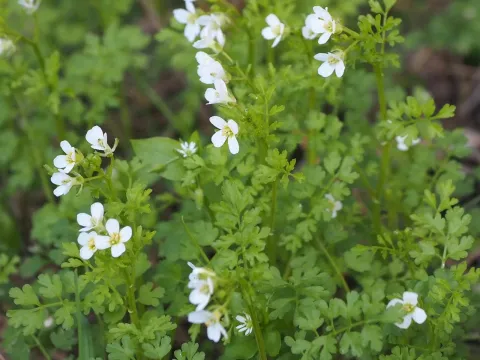
Greek bittercress
Cardamine graeca
Greek bittercress (Cardamine graeca) is a member of the Brassicaceae family, recognized for its specific requirements for germination and early growth. Sowing is best performed in late autumn or early spring, as the plant thrives in cooler temperatures and moist soil conditions typical of these seasons.
What the section contains
Greek bittercress
The seeds should be sown shallowly, ideally covered with a thin layer of fine soil or compost to maintain moisture. Proper contact with the substrate is essential to ensure uniform emergence, which generally occurs within ten to fourteen days when soil temperatures are stable and cool.
Spacing between rows should be maintained at roughly 20 to 25 centimeters to allow for adequate airflow and ease of maintenance. Overcrowding can lead to poor development and increase the risk of disease spread within the crop stand during the rapid vegetative growth phase.
Successional sowing can be employed to ensure a consistent harvest of young foliage throughout the spring. By staggering the sowing dates every two to three weeks, growers can prolong the production period before the arrival of late spring heat, which triggers early flowering.
Preparation of the seedbed involves fine cultivation to create a smooth, friable surface. Incorporating organic matter during the initial soil preparation stages provides the necessary nutrients for the seedling stage and promotes robust root development from the very beginning.
This crop prefers rich, well-drained soils with a slightly acidic to neutral pH level. Greek bittercress is sensitive to soil compaction, so maintaining a loose soil structure is crucial for root health and overall plant vigor throughout its relatively short life cycle.
Adequate soil moisture is the primary requirement for successful cultivation. While the plant needs consistent water, it cannot tolerate waterlogged conditions, which may lead to root rot or pathogen proliferation. Drip irrigation or careful manual watering is recommended to maintain the right balance.
Greek bittercress is well-adapted to partially shaded areas, making it an excellent choice for woodland gardens or understory planting. Intense mid-day sun often leads to stress, shortening the vegetative cycle and causing the plant to bolt prematurely, which reduces the quality of the harvest.
Temperature management is key; the plant performs best at temperatures between 12 and 18 degrees Celsius. When temperatures rise significantly above this range, the plants often shift energy toward seed production, resulting in tougher leaves and a bitter taste profile.
Regular weeding is essential as the crop is not highly competitive against vigorous weeds during the establishment phase. Hand-weeding or shallow hoeing should be performed carefully to avoid damaging the relatively delicate root system of the bittercress plants.
The primary threats to Greek bittercress are typical of the Brassicaceae family, with flea beetles posing a major challenge to young seedlings. These insects can quickly defoliate a bed if not managed promptly, necessitating monitoring during the early weeks of plant development.
Fungal diseases, including powdery mildew and various leaf spot pathogens, are common in humid environments with poor air circulation. These infections typically cause yellowing or necrotic lesions on the leaves, rendering the crop unmarketable if left untreated.
Aphids can colonize the undersides of leaves, especially when plants are under stress from heat or nutrient deficiency. These pests sap the plant's vitality and can facilitate the spread of viral pathogens, making consistent pest management a priority for successful cultivation.
Crop rotation remains the most effective prophylactic measure against soil-borne diseases. By ensuring that the plot has not hosted other cabbage family plants for at least three seasons, growers can significantly reduce the pressure from common soil pathogens and nematodes.
- Consistent monitoring for flea beetle activity.
- Maintaining air circulation to prevent fungal growth.
- Removing debris to minimize pest nesting sites.
The harvest period for Greek bittercress is determined by its growth stage, with the best quality leaves being gathered before the onset of flowering. Harvesting involves selecting the tender, outer leaves from the rosette, allowing the central growing point to continue producing.
Tools used for harvesting should be clean and sharp to prevent bruising or damaging the plant tissues. Carefully cutting the stalks or leaves ensures that the plant remains healthy and can continue producing foliage for a secondary harvest if conditions remain favorable.
Post-harvest handling is critical for maintaining the freshness of the product. The harvested leaves should be kept in a cool, shaded environment and transported quickly to storage to prevent wilting, as the delicate foliage has a high transpiration rate and loses quality rapidly.
Timing the harvest to the early morning hours provides the best results, as the plant cells are fully turgid and the leaves retain maximum water content. This practice ensures that the produce remains crisp and flavorful for a longer duration after it has been picked.
If seed production is not the objective, it is advisable to harvest the plants before they reach the bolting stage. Once the plant begins to transition to its reproductive phase, the concentration of secondary metabolites increases, which may change the texture and flavor of the foliage.