
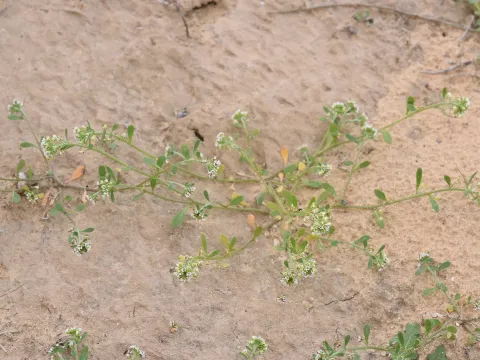
Lobularia arabica
Lobularia arabica
Lobularia arabica belongs to the Brassicaceae family. In agricultural practice, direct seeding in open fields is conducted once the soil temperature is consistently warm, ensuring optimal germination rates.
What the section contains
Lobularia arabica
For more controlled production, greenhouse propagation via plug trays is recommended. Seeds should be sown in March, covered lightly with media, and kept under sufficient light for early development.
Planting density is crucial for crop uniformity. A spacing of 20 to 30 centimeters allows for adequate light penetration and reduces competition for nutrients between individual plants.
The culture exhibits a rapid germination rate, making it suitable for areas where quick soil coverage is required for erosion control or ecological diversity purposes.
Proper site preparation including thorough weed control is essential before sowing to ensure that the initial growth phase of the lobularia is not compromised by invasive species.
This crop thrives in full sun exposure, which is necessary for compact growth and intense flowering. Partial shade can lead to leggy plants and reduced floral production throughout the season.
Well-drained, sandy loam soils with a neutral pH are ideal for Lobularia arabica. Proper drainage is the most critical factor to prevent physiological root stress during the growing cycle.
The plant is noted for its high tolerance to drought conditions, though supplemental irrigation during prolonged dry spells significantly enhances the biomass and overall visual quality.
Nutrient management focuses on moderate nitrogen application to promote vegetative growth, followed by balanced NPK ratios to support the heavy flowering phase common in this species.
Maintaining air circulation is a key environmental requirement, as it mitigates the risk of humidity-related issues that often affect high-density plantings of Brassicaceae.
Cruciferous flea beetles are the primary insect pest for Lobularia arabica. They target foliage during the seedling stage, often requiring early intervention with integrated pest management strategies.
Fungal diseases, specifically powdery mildew, may emerge in environments with stagnant air and excessive moisture, necessitating regular monitoring and preventive fungicide usage.
Aphid populations can colonize plants during peak summer months, impacting plant vigor and potentially acting as vectors for various plant viruses if left uncontrolled.
Cultural control methods such as field sanitation and the removal of alternative host plants from adjacent areas are vital to reducing the overall pest pressure on the crop.
- Integrated pest monitoring programs.
- Proper crop rotation cycles.
- Optimization of soil drainage systems.