
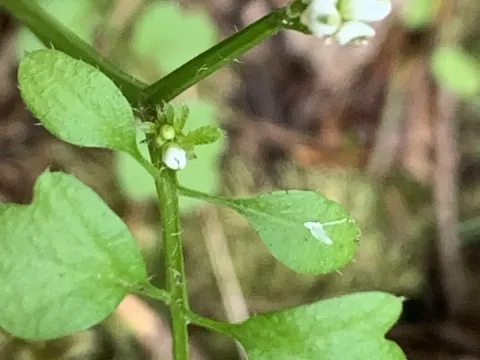
Little western bittercress
Cardamine oligosperma
Little western bittercress (Cardamine oligosperma) is an annual or biennial herbaceous plant belonging to the Brassicaceae family. In agriculture, it is often identified as a persistent weed, particularly in greenhouses and shaded nurseries where moisture levels are consistently high.
What the section contains
Little western bittercress
The plant originates from western North America but has successfully adapted to various regions globally. It thrives in disturbed habitats and prefers cool, damp conditions, making it a frequent colonizer of moist soil surfaces in managed environments.
The environmental requirements for optimal growth include high soil moisture and moderate temperatures. It prefers well-drained but fertile soils with a neutral pH level. Extreme drought conditions significantly inhibit its germination and early development stages.
Botanically, it features a rosette of pinnate leaves and a slender, branched stem that can reach heights of up to 30 centimeters. The flowers are small and white, typically blooming in early spring or throughout the growing season if moisture is sufficient.
The root system is fibrous and relatively shallow, allowing the plant to exploit moisture from the surface layer of the soil efficiently. This biological trait enables it to compete effectively with slow-growing nursery crops for available water and nutrients.
Major pests affecting this plant include flea beetles (Phyllotreta spp.), which are common adversaries for most members of the Brassicaceae family. These insects can cause significant foliage damage during the active growing season.
The plant can act as an alternative host for various fungal pathogens, including those causing clubroot disease. This makes it a potential threat to commercial cabbage or broccoli production in the same vicinity due to the persistence of spores in the soil.
Viral pathogens may also reside within the plant tissue, acting as a reservoir for aphid-transmitted viruses. Regular monitoring is essential to prevent the spread of these diseases to more sensitive agricultural crops.
Effective management strategies rely on preventing seed set. Early cultivation or manual removal of the plants before they reach the flowering stage is the most successful approach to population control in nursery environments.
Chemical control measures must be handled with care, particularly when near commercial Brassicaceae crops, as herbicides effective against the weed may also harm the desired crop cultivars.