
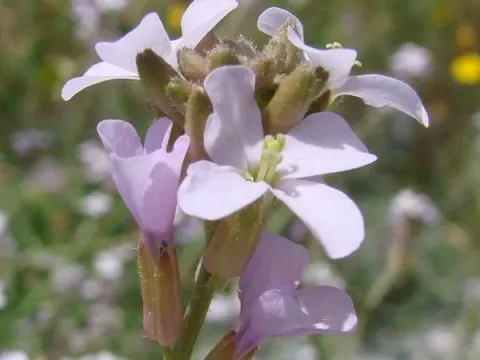
Lonchophora
Lonchophora
Lonchophora (Lonchophora) is a perennial herbaceous grass. Sowing is recommended in early spring when the soil warms up to 8–10 degrees Celsius.
What the section contains

Lonchophora
For optimal root establishment, seeds should be placed at a depth of no more than 2-3 centimeters to ensure good contact with the moist soil layer.
The seeding rate depends on regional characteristics and soil type, averaging 12-15 kilograms per hectare with row planting methods.
Quality cultivation is a crucial step in pre-sowing preparation, as the crop is sensitive to soil compaction in the upper horizon during early growth stages.
Under sufficient moisture conditions, germination occurs within 14–20 days, during which time the crop requires protection from weed competition.
The crop prefers well-drained loamy soils with a neutral or slightly acidic pH, avoiding areas with water stagnation.
Lonchophora exhibits moderate drought tolerance, although rainfall during the tillering phase is critical for achieving maximum vegetative mass.
The plant adapts successfully to temperate climate conditions, demonstrating high winter hardiness in regions with deep soil freezing.
Light exposure plays a key role: on sunny plots, the density of the grass stand is significantly higher, which prevents root rot development.
For intensive development, Lonchophora requires nitrogen fertilizer application during active growth, as well as potassium supplementation in autumn.
The green mass yield of Lonchophora, under proper agronomic management, can reach 25-30 tons per hectare in irrigated farming conditions.
Seed harvesting requires special attention, as the crop tends to shed its seeds upon full maturity of the spike-like panicles.
With proper maintenance of pasture or hayfields, productivity is maintained for 5-7 years without the need for reseeding.
The number of cuts per growing season varies from two to three, depending on thermal intensity and moisture availability.
To maintain high productivity, it is recommended to rotate land use: one year for hay and the next year for moderate livestock grazing.
The most common diseases affecting Lonchophora are cereal rust and powdery mildew, which damage leaf blades during periods of high humidity.
Among pests, grain beetles and cereal flies pose the greatest threat to crops, damaging tender seedlings in early spring.
To prevent fungal diseases, it is necessary to perform timely thinning of the crops and adhere to nitrogen application standards.
Insecticide treatment of crops is justified only when the economic threshold of damage is exceeded, typically during the jointing stage.
- Monitoring the leaf apparatus for spotting symptoms.
- Controlling wireworm population density.
- Timely removal of weed reservoirs for potential infections.
Harvesting for hay is carried out at the beginning of the flowering phase, when the nutrient content in stems and leaves reaches its peak.
Mowing should be performed at a height of 7–10 centimeters to ensure rapid regrowth and protect the plant's growth point from drying out.
After mowing, the mass is wilted in windrows until moisture levels reach 15-18%, allowing for optimal structure retention during baling.
Seed harvesting is carried out in two stages, where cutting occurs at the wax-ripe stage, followed by threshing of the dried plant matter.
Post-harvest seed processing includes thorough cleaning to remove impurities and drying to a standard moisture level to prevent self-heating.