
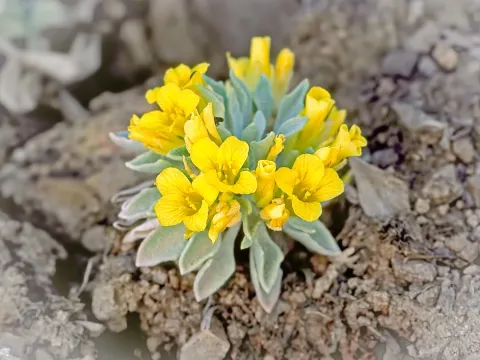
Lesquerella
Lesquerella
Lesquerella is an annual herbaceous plant belonging to the Brassicaceae family. In agronomic practice, seeds are typically sown either in the autumn or early spring, depending on the specific regional climate and the length of the growing season.
What the section contains


Lesquerella
Successful germination requires a well-prepared, fine-textured seedbed to ensure close contact between the seed and soil moisture. Traditionally, row planting with specific spacing is utilized to facilitate efficient field maintenance and weed control throughout the early stages of development.
It is crucial to avoid deep sowing, as the small size of Lesquerella seeds necessitates shallow placement for rapid emergence. An optimal seeding depth usually does not exceed 1 to 2 centimeters, which is critical for achieving uniform stand establishment across the field.
The timing of sowing directly influences root system development before the onset of critical temperatures. With winter cultivation, the plant is able to form a robust rosette, which positively impacts overwintering survival and subsequent yield potential during the following summer season.
Managing planting density is a key factor, as excessive crowding can lead to competition for light and nutrients, thereby reducing the productivity of individual plants during the flowering and pod-filling phases.
The crop exhibits significant drought tolerance, making it a promising candidate for cultivation in arid or semi-arid regions. It successfully adapts to conditions where traditional oilseeds, such as canola, often struggle due to insufficient soil moisture levels.
Lesquerella prefers sandy loam or loamy soils with excellent drainage, avoiding areas with standing water. High water tables are detrimental to the root system, potentially leading to the development of root rots and significant crop failure.
The temperature regime for Lesquerella growth should be moderate. Despite its hardiness, extreme spring frosts during the flowering stage can significantly reduce fruit-setting potential; therefore, field site selection must account for local microclimatic variations.
The plant demonstrates moderate tolerance to soil salinity, which broadens its potential geographical range. Mineral nutrition should include balanced levels of nitrogen, phosphorus, and potassium, although excessive nitrogen applications can promote vegetative growth at the expense of seed production.
Light requirements are high, as photosynthetic activity directly determines the accumulation of valuable fatty acids in the seeds. Consequently, Lesquerella requires open, well-illuminated fields free from shading caused by forest edges or infrastructure.
The yield of Lesquerella depends on the agronomic management and moisture availability during critical development stages. Despite its status as a niche crop, stable seed yields per unit area can be achieved through strict adherence to technical protocols.
The primary value of the harvest lies in its high concentration of hydroxylated fatty acids, particularly lesquerolic acid. The oil derived from these seeds possesses unique viscosity properties, which determines its high value within the industrial market.
Oil accumulation in the seeds continues until full maturity, making it essential to ensure adequate nutrient supply during the filling phase. Nutrient deficiencies during this period often result in shriveled seeds and a reduced overall oil yield.
To enhance productivity, it is recommended to monitor crop health and apply micro-nutrients as needed to support metabolic processes. Effective insect-mediated pollination also contributes significantly to increasing the number of pods and total harvest weight.
Average yield figures remain a subject of active research, as the selection of new, higher-yielding varieties continues in several countries aiming to replace imported technical oils with locally produced raw materials.
Common threats to Lesquerella include fungal diseases that proliferate in high-humidity conditions. Among these, various forms of leaf spots are frequently encountered, impacting the plant's photosynthetic capacity and structural integrity.
Insect pests characteristic of the Brassicaceae family can cause substantial damage to the crops. These include flea beetles, which are particularly dangerous during the seedling stage, and various types of weevils that damage the reproductive organs.
Control measures primarily focus on crop rotation to prevent the buildup of soil-borne pathogens. Rotating Lesquerella with cereal crops is highly recommended to significantly reduce the pressure from harmful organisms.
In cases of severe infestations, systemic insecticides are applied. However, the selection of chemical agents must be strictly controlled to avoid harming beneficial pollinating insects, which are necessary for the successful fruition of the crop.
An important aspect of crop protection is the timely removal of weeds, which can serve as reservoirs for viral diseases. Weed-free fields demonstrate better resilience against pathogens and provide higher overall productivity.
Harvesting Lesquerella requires careful monitoring of seed moisture, as the pods are prone to shattering upon drying. The optimal harvest window occurs when seeds reach physiological maturity and moisture levels drop to acceptable ranges for storage.
To minimize harvest losses, swathing is often practiced. The plants are first cut and left to dry in windrows, where they continue to mature before being threshed, a method that helps minimize seed shattering from opened pods.
Direct combining is also possible but requires precise equipment calibration, particularly regarding threshing cylinder gaps and drum speed. Aggressive threshing leads to mechanical damage to the seeds and degrades the quality of the oil.
Post-harvest processing includes mandatory cleaning to remove impurities and drying to standard moisture levels. Failure to follow proper storage protocols leads to rapid oxidation of the oil and the loss of its unique chemical characteristics, significantly devaluing the harvest.
Utilizing modern harvesting machinery with gentle separation systems allows for a significant increase in the output of high-quality raw material. With proper logistical organization, Lesquerella becomes a highly profitable crop for the chemical industry.