
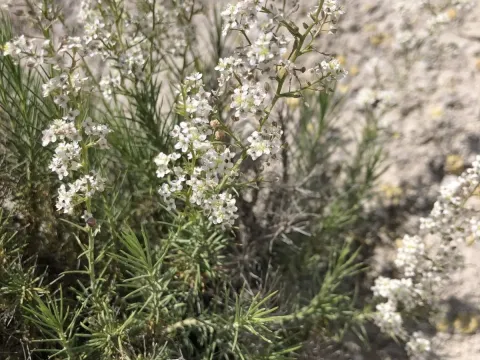
Lepidium subulatum
Lepidium subulatum
Sowing of Lepidium subulatum occurs during the early spring season, typically when soil temperatures reach 10–12 degrees Celsius. Optimal planting timing is crucial to take advantage of available spring soil moisture, which ensures uniform germination and rapid initial growth of seedlings.
What the section contains
Lepidium subulatum
The standard agricultural practice involves row seeding with a spacing of approximately 20–25 centimeters between rows. Seeds should be placed at a shallow depth of about 1 to 1.5 centimeters, followed by light compaction of the soil to ensure optimal seed-to-soil contact for moisture absorption.
As a member of the Brassicaceae family, Lepidium subulatum displays significant environmental plasticity and resilience. The crop thrives in open, sunny locations where full light exposure supports the accumulation of secondary metabolites, which are essential for its specific chemical profile.
The species prefers light-textured soils such as sandy loams or well-drained silt loams with a near-neutral pH balance. Excellent soil aeration is mandatory, as the root system is sensitive to waterlogging, which can quickly lead to physiological stress and root rot in heavy, compacted soils.
This crop is well-adapted to moderate climate zones and exhibits good frost tolerance during its vegetative stages. While it is naturally drought-tolerant due to its arid origin, supplemental irrigation during the seedling stage significantly improves biomass yield and overall crop uniformity.
The main pests affecting Lepidium subulatum are cruciferous beetles, particularly flea beetles, which can cause significant damage to young leaves shortly after emergence. Integrated pest management strategies, including the use of row covers or biological controls, are recommended to protect the crop.
Fungal pathogens associated with excessive moisture and poor air circulation represent the primary disease risk. Preventing soil compaction and avoiding over-irrigation are key cultural practices that effectively reduce the incidence of soil-borne pathogens and root diseases.
Harvesting for commercial use is timed to coincide with the late vegetative stage, specifically before the plant enters the reproductive phase of flower initiation. Collecting the biomass at this precise time ensures the highest quality of leaf material and optimal nutrient concentration.
Post-harvest management involves immediate cooling of the foliage to maintain leaf turgor and minimize respiration rates. For best market quality, the crop should be processed or shipped under controlled temperature conditions to preserve its shelf life and sensory attributes.