
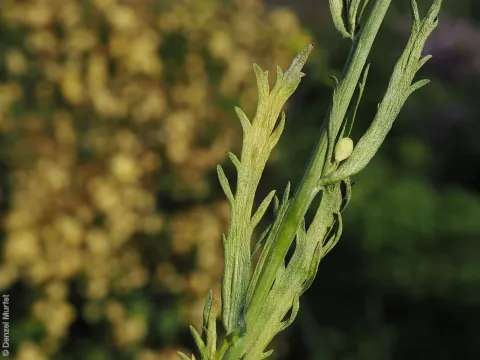
Lepidium sagittulatum
Lepidium sagittulatum
Lepidium sagittulatum belongs to the Brassicaceae family and is a resilient herb adapted to steppes and semi-desert environments. Understanding its growth cycle is key for successful cultivation in agricultural settings.
What the section contains
Lepidium sagittulatum
The sowing process is traditionally performed in early spring. During this period, the soil retains essential moisture from snowmelt, which is crucial for the germination of the small seeds and initial plant establishment.
Precise planting depth, usually between 1 and 2 centimeters, ensures that the seedlings have enough energy reserves to reach the surface. Preparing a firm and fine seedbed helps in maintaining consistent planting depth.
The plant quickly transitions from a basal rosette phase to stem development. Strategic row spacing is recommended to balance plant density, minimizing nutrient competition and maximizing individual plant health.
In experimental plots, early sowing has shown a significant positive impact on biomass yield. By optimizing the timing based on local climate data, farmers can achieve uniform emergence and a robust start for the crop.
This crop thrives in sunny locations with well-drained, light-textured soils. It displays a remarkable ability to tolerate saline conditions, making it a viable candidate for reclaiming or utilizing degraded agricultural land.
In terms of climate, Lepidium sagittulatum is highly adaptive. It requires moderate rainfall but possesses deep root systems that allow it to withstand temporary droughts, often performing better than conventional crops in arid regions.
The ideal temperature range for active growth lies between 18 and 26 degrees Celsius. The plant shows high tolerance for temperature fluctuations, including cool nights typical of its native range in Central Asia.
Soil management should focus on maintaining adequate aeration and structure. While the plant is hardy, regular inter-row cultivation during the early growth stages is beneficial for reducing weed pressure and improving moisture infiltration.
Fertilization regimes should be calculated based on soil testing, with a focus on phosphorus and potassium to strengthen root development. Nitrogen application can be used to stimulate leaf growth in the early vegetative phase.
The harvesting of green biomass for forage is most efficient during the bolting and early flowering stages. This is when the nutritional content of the leaves and stems is at its peak, offering the highest value for livestock.
Mechanical harvesting using forage cutters is the standard approach. Ensuring a clean cut at a specific height is vital to protect the basal growing points, facilitating regrowth if multiple cuttings per season are planned.
For seed production, harvesting should be delayed until the seed pods have reached physiological maturity and turned a light brown color. Careful handling during this stage is necessary to minimize shattering losses.
Post-harvest management involves immediate drying or processing. Drying should be conducted in well-ventilated areas away from direct sunlight to preserve the integrity of the plant compounds and prevent quality degradation.
Seed storage is critical for future seasons. Seeds must be stored in cool, dry conditions within airtight containers to maintain high viability over extended periods. Regular monitoring of seed moisture content is essential.