
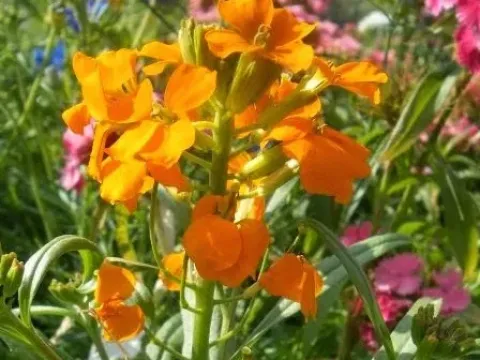
Kotschy's wallflower
Erysimum kotschyanum
Kotschy's wallflower (Erysimum kotschyanum) belongs to the Brassicaceae family. This perennial herbaceous plant naturally thrives in mountainous regions, specifically preferring rocky slopes and scree habitats.
What the section contains
Kotschy's wallflower
The plant exhibits high ecological plasticity regarding temperature regimes, yet it is critically sensitive to moisture accumulation in the root zone. It thrives best under conditions of good soil aeration and intense solar radiation.
Optimal soils for this crop are light sandy or loamy substrates with a neutral to slightly alkaline pH. Heavy clay soils that tend to compact negatively impact the development of the plant's taproot system.
The crop is relatively drought-resistant, a trait inherited from its mountain origins. However, during the active vegetative phase, moderate irrigation significantly promotes biomass accumulation and improves the quality of the raw medicinal material.
In commercial cultivation, it is essential to maintain a row spacing of at least 45-60 cm. This spacing prevents plant suppression and ensures the necessary level of insolation for robust shoot development.
The main phytopathological threats to Kotschy's wallflower are fungal diseases, which typically emerge due to improper water management. Specifically, root rot is common when there is excessive moisture or standing water in the root area.
Pests typical of all cruciferous plants pose a significant risk to this crop as well. Crucifer flea beetles can cause severe damage to young seedlings, significantly reducing plant density during the first year of growth.
The pollen beetle is another potentially hazardous pest. It damages the plant's flower buds, which leads to reduced seed productivity, especially if the cultivation objective is seed production.
To manage pest populations, it is recommended to employ integrated pest management strategies, including sound crop rotation practices and spatial isolation from other members of the Brassicaceae family.
Disease prevention involves pre-sowing seed treatment and timely thinning of the stands. The application of chemical protection agents must be strictly regulated based on the plant's growth stage and the intended use of the final product.