
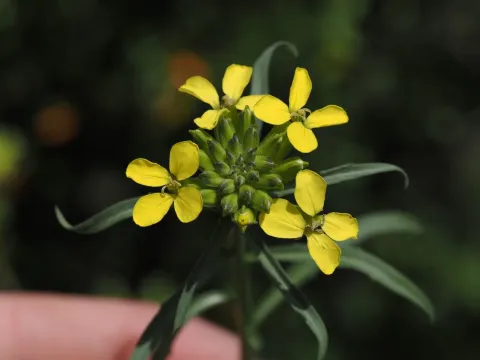
Rhaetian wallflower
Erysimum rhaeticum
Rhaetian wallflower (Erysimum rhaeticum) is a specialized crop belonging to the Brassicaceae family, often cultivated for its chemical properties.
What the section contains
Rhaetian wallflower
Sowing should take place in early spring when the soil temperature has consistently reached at least 8 to 10 degrees Celsius for optimal germination.
Seeds should be sown at a shallow depth of approximately 1 centimeter, ensuring they are pressed firmly into the soil to maintain good contact.
Row spacing is typically maintained at 30 to 45 centimeters, allowing for efficient weeding operations and sufficient airflow between plants.
Seedbed preparation must be meticulous, ensuring the soil is fine-textured to accommodate the small size of the seeds and prevent burial under clods.
This species is native to mountainous regions and requires full sun exposure to thrive and produce consistent vegetative growth throughout the season.
Soil drainage is the most critical factor for success; the Rhaetian wallflower cannot tolerate waterlogged conditions which quickly lead to root decay.
A neutral to slightly alkaline, well-draining sandy or rocky soil profile is ideal for mimicking the plant's natural high-altitude habitat.
The plant demonstrates significant tolerance to drought once established, making it suitable for regions with limited summer rainfall.
Fertilization should be moderate, focusing on potassium and phosphorus to support flowering and secondary metabolite production without excessive foliage.
Cruciferous flea beetles represent the primary pest threat, particularly during the vulnerable seedling stage of the crop's development.
Fungal pathogens such as downy mildew can become an issue if the planting density is too high or if the canopy does not dry out sufficiently.
Rotation strategies are vital to minimize the accumulation of soil-borne diseases such as clubroot, which is common in many Brassicaceae species.
Integrated pest management should include regular scouting and the use of pheromone traps to determine the necessity of targeted insecticide applications.
Proper weed control is essential not only for resource competition but also to eliminate potential host plants for common crucifer pests and viruses.