
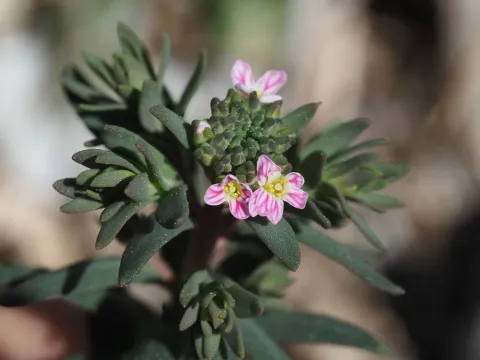
Rock cress
Aethionema saxatile
Sowing Aethionema saxatile seeds is best performed in early spring, once the danger of severe frost has passed. Seeds should be sown in a well-draining, sandy compost mix to simulate their natural alpine habitat.
What the section contains
Rock cress
The seeds require light to germinate effectively, so they should be surface-sown and pressed gently into the substrate. Covering them with a very thin layer of grit helps maintain moisture levels around the seeds while preventing damping-off diseases.
Germination typically occurs within two to four weeks at a constant temperature of around 18–20 degrees Celsius. Maintaining consistent but not excessive moisture is the key to successful seedling development during this stage.
Seedlings are best kept in individual pots until they are established enough to handle transplanting. Because they develop a deep taproot, it is essential to avoid disturbing the root system once the plants start growing vigorously.
Transplanting into the permanent location should be done carefully during cloudy weather. Ensure the final site provides the specific rocky conditions that the species requires for healthy growth and long-term survival.
Aethionema saxatile, commonly known as rock cress, is a member of the Brassicaceae family. It is a compact, perennial plant originating from the limestone cliffs and stony slopes of Southern and Central Europe.
The plant thrives in poor, rocky, and alkaline soils. It is critical to ensure high drainage capacity as the plant will quickly succumb to root rot if the soil remains waterlogged, especially during the dormant winter months.
Exposure to full sunlight is non-negotiable for this species. It demands a position with direct sun for the majority of the day to maintain its dense, cushion-like habit and to encourage a profuse display of pink to purple flowers.
As a true alpine plant, it is exceptionally drought-tolerant once established. It requires minimal irrigation, as excess water often leads to structural weakness and increased susceptibility to fungal diseases.
The plant is hardy and does not require complex fertilization. In fact, providing excess nutrients often leads to excessive vegetative growth at the expense of flowering and reduces the plant's natural resistance to cold and drought.
The most significant threat to Aethionema saxatile is excessive moisture around the crown of the plant. Ensuring the root zone is surrounded by grit or gravel prevents water from pooling, which is vital for preventing root and crown decay.
Flea beetles are a common pest that may attack the foliage, especially on young plants. Regular monitoring and the application of neem oil or other organic pesticides can effectively keep pest populations below the economic threshold.
Powdery mildew can occur if there is insufficient air circulation around the plants. Proper spacing and avoiding overhead watering are effective preventive measures to maintain plant health throughout the growing season.
Slugs and snails may occasionally feed on the plant's succulent growth. Creating a physical barrier of sharp-edged gravel around the base of the plant is a common and effective cultural practice for alpine gardening.
In cases where the soil is too heavy or acidic, the plant becomes stunted and vulnerable to various opportunistic pathogens. Always check soil pH and texture before planting to ensure the long-term vigor of the crop.