
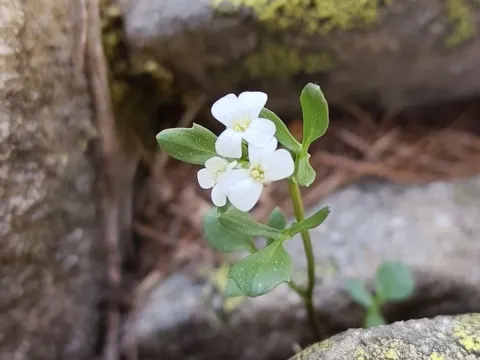
Reseda-leaved bittercress
Cardamine resedifolia
Cardamine resedifolia is a perennial herb belonging to the Brassicaceae family, originally adapted to the harsh conditions of alpine environments.
What the section contains
Reseda-leaved bittercress
Propagation is typically performed via seeds, which require stratification to achieve optimal germination rates during the early spring season.
Seeds should be sown in prepared seedbeds at a depth of no more than 0.5 cm, as they require a certain amount of light for successful emergence.
It is recommended to maintain a consistent moisture level in the substrate during the germination period to ensure the development of strong seedlings.
Row spacing of about 20–30 cm provides enough space for the plant to form a rosette and prevents overcrowding, which is essential for healthy growth.
The plant thrives in cool, temperate climates and demonstrates remarkable hardiness, reflecting its alpine origin in European mountainous regions.
Well-drained, nutrient-rich, and slightly acidic to neutral soils are optimal for maximizing the biomass yield of this crop.
Water management is critical; the crop requires constant soil moisture but will suffer significantly if the roots become waterlogged.
Partial shade is preferable to full sun, especially in regions with hot summers, as intense sunlight can dehydrate and stress the foliage.
Regular weeding and the application of balanced organic fertilizers can significantly enhance the development of the leaf rosette.
The crop is susceptible to common pests of the cabbage family, particularly flea beetles, which can cause severe damage to young leaves.
Fungal pathogens such as powdery mildew may appear in conditions of poor air circulation and high ambient humidity during the summer.
Slugs and snails may also cause physical damage to the leaves, necessitating the use of physical barriers or targeted control measures.
To mitigate these risks, it is essential to implement crop rotation and avoid planting on plots previously occupied by other cruciferous crops.
Early detection of symptoms through regular field inspections is the most effective way to protect the crop from widespread disease or pest outbreaks.
The harvesting of leaves is best performed before the plant initiates flowering, ensuring the texture and flavor of the greens remain high.
Careful harvesting with sharp tools ensures that the center of the plant is not damaged, allowing for potential regrowth in favorable conditions.
Immediately after harvest, the leaves should be processed or cooled to prevent wilting and degradation of their nutritional content.
If seeds are the primary goal, harvest the pods as soon as they start to turn brown, taking care to contain them to prevent seed loss.
Post-harvest handling must be quick and careful, as the thin leaves of this bittercress are highly sensitive to temperature changes and drying.