
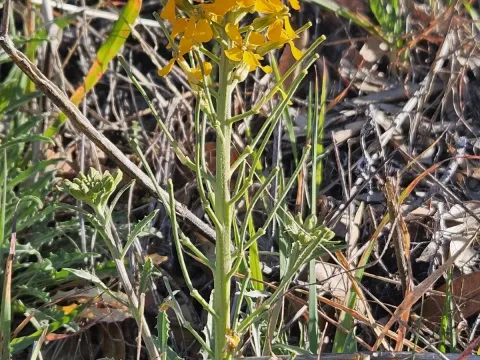
Erysimum capitatum
Erysimum capitatum
Erysimum capitatum, commonly known as the western wallflower, is a member of the Brassicaceae family. It is native to the western regions of North America, where it thrives in varied habitats ranging from rocky slopes to open forests.
What the section contains
Erysimum capitatum
The plant typically follows a biennial or short-lived perennial life cycle. In the first year, it develops a rosette of leaves, while in the second year, it produces a stout flowering stalk that can reach significant height.
For cultivation, seeds should be sown in late autumn or early spring. A shallow seeding depth is recommended, as small seeds require consistent surface moisture to germinate effectively without being buried too deep.
The species exhibits impressive cold tolerance, making it suitable for regions with harsh winter conditions. Once established, the root system is robust enough to endure seasonal fluctuations in temperature.
It is widely appreciated not only for its botanical interest but also for its ecological role as a nectar source for many species of pollinators, including bees and butterflies during the spring season.
Successful cultivation requires soil that is well-drained and light in texture. A pH level ranging from neutral to slightly alkaline is ideal for promoting healthy growth and vigor in this species.
Full sun exposure is a critical requirement for this plant. In environments with inadequate sunlight, the plants tend to become leggy, lose their characteristic form, and display significantly reduced flowering density.
Erysimum capitatum is highly drought-tolerant due to its ability to develop a deep, efficient root system. Supplemental irrigation is generally unnecessary unless the area experiences severe and prolonged drought conditions.
Soil nutrient requirements are modest, and the plant often performs well in poorer soils that might hinder other crops. Excessive nitrogen application should be avoided, as it encourages weak, vegetative growth.
Environmental stability is best maintained by keeping the planting area free of invasive weeds. Given its natural adaptation to wild habitats, the plant thrives with minimal intervention in well-selected locations.
Common pests affecting Brassicaceae, such as flea beetles, represent a potential threat to young foliage. Integrated pest management, including regular inspection, is essential to mitigate damage during the establishment phase.
Fungal issues like powdery mildew can occur if airflow is poor and humidity levels remain consistently high. Proper plant spacing is the most effective cultural practice to prevent the spread of such infections.
Soil-borne pests may target the root system, potentially causing stunted growth. Implementing a crop rotation strategy or periodic mechanical cultivation helps in keeping the soil population of pests under control.
Bacterial spots or rots may develop during prolonged wet periods. If symptoms appear, the immediate removal of affected plant material and careful moisture management are necessary to prevent further spread.
Preventative care, including the selection of healthy seeds and ensuring adequate soil drainage, remains the cornerstone of maintaining a healthy population of this crop throughout the season.