
Erucastrum nasturtiifolium
Erucastrum nasturtiifolium
Description
Growing requirements
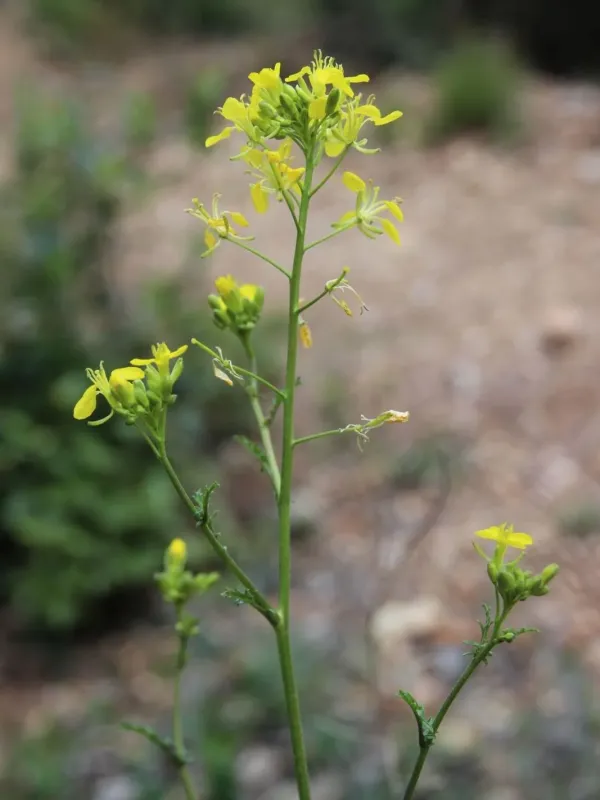
Erucastrum nasturtiifolium is a biennial or perennial herbaceous plant belonging to the Brassicaceae family. It is characterized by its hardy nature and distinct pinnatifid leaves, which contribute to its rapid biomass accumulation during the growing season.
The plant originates from Southern and Central Europe, naturally inhabiting rocky slopes and disturbed landscapes. Because of its ecological plasticity, it has been explored for its potential role in agricultural systems within temperate regions.
The crop thrives in sunny locations with well-drained soils. While it exhibits strong resilience to environmental stress, it prefers fertile loam or sandy loam substrates with good aeration to support its extensive root network.
One of the key requirements for successful growth is a balanced moisture regime. Although the plant is somewhat drought-tolerant once established, supplemental irrigation during the seedling stage significantly enhances its overall yield and stand density.
Agricultural utility for Erucastrum nasturtiifolium primarily includes its use as a green manure crop and potential forage source. Its ability to outcompete common weeds makes it a valuable tool in organic soil management and land rehabilitation projects.
Main diseases and pests
Like most members of the Brassicaceae family, this species is susceptible to clubroot and various downy mildew pathogens. These diseases are more prevalent in fields with poor drainage or in systems where rotation is not strictly followed.
Crucifer flea beetles represent the most significant pest threat, particularly during the early emergence of the crop. Other potential pests include cabbage moths and sawflies that feed on foliage, necessitating close monitoring of plant development.
Management strategies involve rigorous crop rotation protocols and the use of pest-resistant cultivation techniques. Proper field sanitation is essential to reduce the inoculum levels of soil-borne pathogens and ensure a sustainable yield of the crop.