
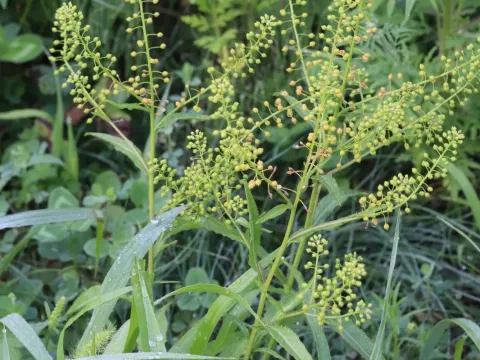
Rorippa globosa
Rorippa globosa
Rorippa globosa, a member of the Brassicaceae family, is an interesting crop for cultivation. In temperate climates, sowing should be performed in early spring as soon as soil temperatures reach 5–8 degrees Celsius.
What the section contains
Rorippa globosa
The plant thrives in well-prepared, loose, and fertile soil. Seeds should be sown at a depth of 1–1.5 centimeters to ensure optimal contact with the moist substrate.
For continuous harvesting throughout the growing season, sequential sowing every 2–3 weeks is highly recommended.
Commercial production often utilizes row or band sowing methods, with row spacing maintained at approximately 20–25 centimeters for optimal growth.
Seeds demonstrate high germination energy provided that soil moisture is kept stable in the surface layer during the initial days after sowing.
This crop prefers sufficiently moist loamy or sandy loam soils with a neutral pH level for the best yield performance.
While the plant requires good light exposure for healthy development, it may need light shading during extreme heat in the summer months.
The temperature optimum for vegetative growth is between 15 and 20 degrees Celsius; intensive irrigation is necessary during periods of heat stress.
Efficient drainage is a key requirement, as waterlogging can lead to root rot despite the crop's natural affinity for moist environments.
Organic fertilization is beneficial, but nitrogen application must be strictly regulated to prevent nitrate accumulation in the edible leaf tissue.
The yield of Rorippa globosa is directly dependent on the intensity of agronomic practices and the precision of irrigation management.
When maintaining optimal plant density, productivity per unit area can reach high levels, comparable to other members of the cabbage family.
Marketable yields are primarily generated by active leaf mass expansion, which remains tender and juicy under proper care.
Under controlled greenhouse conditions, yields are significantly higher due to the ability to manage the microclimate over an extended production period.
Regular harvesting of the green parts stimulates regrowth, allowing for multiple harvests within a single vegetative cycle.
Crucifer flea beetles represent the primary threat to the crop, potentially causing significant damage to young seedlings during early development.
High humidity combined with poor air circulation can lead to diseases such as powdery mildew or downy mildew, requiring proper ventilation.
Slugs and snails can also cause substantial harm to plantations, especially in rainy seasons, by feeding on the tender leaf blades.
To mitigate pest spread, it is essential to follow crop rotation protocols and avoid growing the crop near other Brassicaceae family members.
Chemical protection should be used with extreme caution, as the plant tends to absorb and accumulate active ingredients in its leaves quickly.
Harvesting usually begins when the plants reach technical maturity, which typically occurs 30–45 days after full emergence.
Harvesting is performed by cutting the above-ground parts of the plant or by selectively picking individual leaves to encourage continuous production.
Early morning hours are ideal for harvesting, as the leaves are turgid with moisture and possess the highest quality and flavor profiles.
Post-harvest, the product should be cooled immediately and kept out of direct sunlight to prevent wilting and maintain visual appeal.
The crop can be stored in fresh conditions at temperatures between 0 and 2 degrees Celsius with high humidity.