
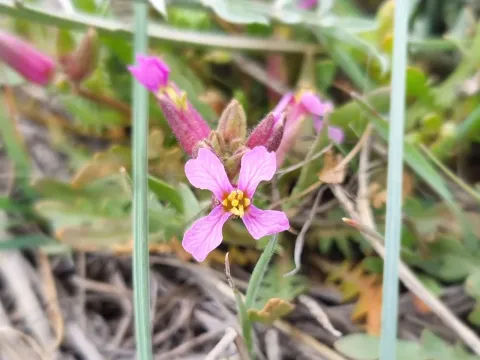
Purple Chorispora
Chorispora purpurascens
Purple Chorispora (Chorispora purpurascens) is an annual herbaceous plant belonging to the Brassicaceae family. It is recognized for its adaptive nature, often found in field environments where it interacts with various agricultural crops as a ruderal or segetal species.
What the section contains
Purple Chorispora
The plant originates from the regions of Central Asia, where it has evolved to thrive in diverse and often harsh environmental conditions. Its range of growth includes steppes, disturbed soils, and agricultural fields where it competes for nutrients and light.
Botanically, it is characterized by its pubescent (hairy) stems and distinct purple-to-violet flowers. These features assist in identifying the plant within field populations during its spring and early summer flowering period, which is crucial for monitoring field health.
The plant demonstrates significant soil adaptability, preferring well-drained, loose substrates, but capable of establishing in varied soil textures. It possesses a deep taproot system, which contributes to its resilience in arid or semi-arid environments by accessing subsurface moisture.
In terms of agricultural management, Purple Chorispora requires vigilance in crop rotation strategies. Ensuring soil tillage practices prevent the seed bank from accumulating is fundamental, as the plant can reproduce rapidly if left unchecked in fallow or poorly managed areas.
As a member of the Brassicaceae family, Purple Chorispora is susceptible to pathogens common to related crops, including crucifer diseases such as clubroot and downy mildew. This makes it a potential secondary host for diseases that could impact high-value vegetable crops.
Pest pressure is primarily driven by cruciferous flea beetles and various caterpillars that feed on its leaves and stems. These pests can cause significant damage to the plant, which often acts as an early-season attractant before moving into neighboring cash crops.
Root-rot pathogens and fungi can also affect the plant in overly moist soil conditions. The presence of these organisms often depends on the surrounding microclimate and the density of the vegetation cover in the affected area.
Integrated Pest Management (IPM) strategies are essential for controlling its spread and reducing the risk of pest migration. This includes the mechanical removal of plants prior to flowering to break the reproductive cycle of both the weed and associated pests.
Chemical control involving the targeted application of herbicides is feasible when the plant is at a young stage. Choosing the correct chemical timing is vital to minimize environmental impact while maximizing the efficacy of the treatment on the plant population.