
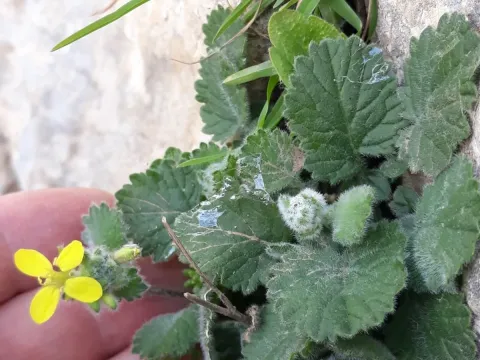
Pubescent mustard
Sinapis pubescens
Pubescent mustard (Sinapis pubescens) is a member of the Brassicaceae family. In agricultural practices, sowing is recommended early in the spring, once soil temperatures reach 5–8 degrees Celsius.
What the section contains
Pubescent mustard
The seeds possess high germination energy, allowing for consistent emergence when planted at a depth of 2 to 3 centimeters, which ensures proper contact with moist soil.
Planting is carried out using row drilling methods with a spacing of 15–20 centimeters, which optimizes plant density and provides each plant with adequate space for growth.
Post-sowing rolling of the soil is a vital step to ensure even moisture distribution and firm seed-to-soil contact, which accelerates uniform sprouting across the field.
Early sowing allows the crop to effectively utilize winter moisture reserves before the onset of summer drought periods, which is crucial for maximizing early growth rates.
This crop thrives in open fields with high levels of direct sunlight, as intense solar radiation is essential for the accumulation of high-quality vegetable oils.
The best soil types for Pubescent mustard are fertile chernozems or light loams, which provide an ideal pH balance and good physical structure for root development.
While the plant shows moderate drought tolerance, it requires consistent moisture during critical development phases to ensure high vegetative and reproductive performance.
Waterlogged or highly acidic soils are unsuitable for this crop, as they severely inhibit root development and make the plant more susceptible to diseases.
Deep plowing prior to sowing is recommended to improve aeration and facilitate the penetration of the plant's taproot, which is vital for nutrient uptake.
The yield potential of Pubescent mustard is heavily dependent on the precision of agronomic practices and favorable climatic conditions during the growing cycle.
The application of mineral fertilizers, specifically those rich in phosphorus and potassium, significantly contributes to increased seed yield and quality.
Productivity remains stable under proper management, making this crop a reliable choice for farmers focusing on diversified oilseed production.
Consistent weed control throughout the early vegetative phase is one of the most effective ways to ensure that plants reach their full yield potential.
High yields are generally achievable when the crop is sown in its optimal geographical range and managed with appropriate density and nutrient inputs.
Crucifer flea beetles represent the most significant threat to young plants, often causing damage that can jeopardize the entire stand if left unmanaged.
During the flowering and pod-filling stages, the crop is susceptible to pollen beetle infestations, necessitating regular monitoring to prevent significant damage.
Fungal diseases, including downy mildew, tend to proliferate in conditions of high humidity or in overly dense plantings where airflow is restricted.
Crop rotation serves as a primary preventative measure, effectively reducing the risk of pest and disease carryover from previous seasons.
Integrated pest management strategies should be employed, utilizing chemicals only when strictly necessary and in accordance with economic injury thresholds.
Harvesting is typically performed using direct combining when the seeds reach full maturity and the moisture content decreases to 12–14 percent.
It is critical to avoid delays in harvesting, as prolonged exposure to field conditions can lead to pod shattering and significant loss of yield.
The optimal time for harvest operations is early in the morning or during the evening hours to reduce shattering losses caused by wind or mechanical vibration.
Once harvested, the seed mass requires immediate cleaning to remove plant debris and proper drying to ensure stability during long-term storage.
Modern harvesting equipment must be calibrated correctly to handle the seeds gently, ensuring maximum efficiency and the highest possible quality of the final product.