
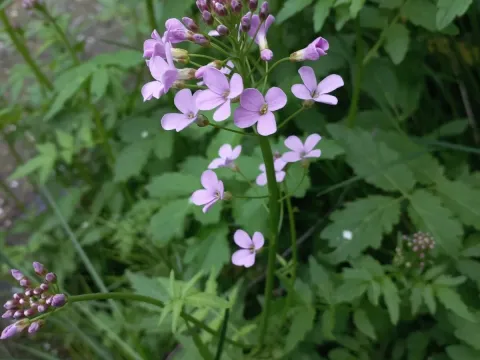
Large-leaved bittercress
Cardamine macrophylla
Large-leaved bittercress (Cardamine macrophylla) is a perennial herbaceous plant belonging to the Brassicaceae family. It is recognized for its distinctive broad foliage and robust rhizomatous structure.
What the section contains
Large-leaved bittercress
Native to the forest regions of Siberia and parts of East Asia, this plant thrives in temperate climates and moist, sheltered environments where humidity remains consistently high.
The cultural requirements demand fertile, humus-rich soil with excellent drainage properties to prevent root suffocation while maintaining sufficient moisture levels for active growth.
Partial shade is considered the optimal light condition, as intense direct sunlight can cause rapid dehydration of the delicate leaf blades during the peak summer months.
Propagation is typically managed through division of rhizomes or seed dispersal, as the plant shows high adaptability to established moist soil niches in gardening and specialized cropping.
The primary agricultural threats to Cardamine macrophylla include cruciferous flea beetles, which can significantly defoliate young plants in the spring.
Fungal pathogens such as downy mildew and various root rot fungi are prevalent when air circulation is poor or if the soil remains waterlogged for extended periods.
Slugs and snails may occasionally feed on the foliage, especially in damp, shaded environments where the plant's moisture requirements are ideally met.
Maintaining a clean planting area by removing debris and weeds helps reduce the overwintering sites for potential pests and reduces the risk of disease spread.
Proper density management is essential to ensure adequate airflow around the base of the plants, which serves as a natural preventive measure against common Brassicaceae diseases.