
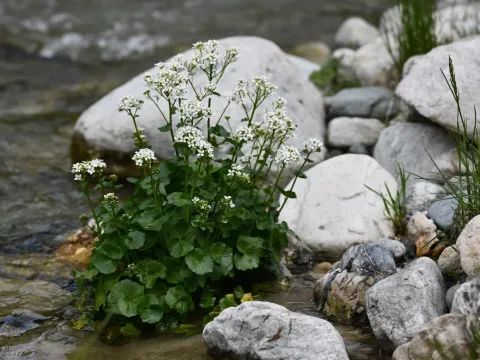
Cardamine asarifolia
Cardamine asarifolia
Cardamine asarifolia is a perennial plant that is best propagated by sowing seeds in late autumn. Cold stratification is essential for breaking seed dormancy, which allows for uniform germination in the early spring months.
What the section contains
Cardamine asarifolia
When sowing, place seeds on a moist, nutrient-rich potting medium. Only a light covering of soil is needed, as the seeds benefit from a slight amount of exposure to light during the initial stage of development.
For greenhouse cultivation, you may start seeds in trays during late winter. Maintaining a constant temperature of around 15 degrees Celsius ensures that the seedlings emerge healthy and vigorous before they are moved to the outdoors.
Transplanting should occur once the risk of spring frost has completely passed. The plant prefers to be placed in an area that mimics its natural habitat, which is characterized by cool, damp, and shady environments.
Spacing is a vital consideration for this species. Plant individuals at least 20–30 centimeters apart to prevent overcrowding, which can hinder the growth of the basal leaf rosettes and increase disease susceptibility.
This species belongs to the Brassicaceae family and is highly adapted to wet, shaded environments such as stream banks and moist forest floors. It thrives in locations where the humidity remains high throughout the growing season.
The soil should be rich in organic matter, slightly acidic, and consistently moist but well-draining. Avoid locations with heavy clay that tends to compact, as this can severely restrict the oxygen supply to the roots.
In terms of light, Cardamine asarifolia requires partial to full shade. It is an excellent candidate for woodland gardens or north-facing borders where harsher sun exposure is limited. Excessive sunlight often leads to leaf burn and wilting.
Temperature management is straightforward, as the plant is hardy in temperate climates. It prefers cool summer conditions and may enter a state of dormancy if temperatures rise significantly above 25 degrees Celsius for prolonged periods.
Maintenance includes periodic watering during dry spells to ensure the soil never fully dries out. Applying a layer of organic mulch around the base of the plant helps retain moisture and keeps the root zone cool during the heat of summer.
The primary threats to this plant are fungal infections, particularly those triggered by poor air circulation or over-saturation of the soil. Root rot is a common issue if drainage is not managed correctly.
Slugs and snails are the most prominent pests, as they are attracted to the succulent foliage of the Cardamine genus. Gardeners should implement regular monitoring or use natural barriers to prevent these mollusks from damaging the leaves.
Crucifer flea beetles may occasionally attack the plants during hot, dry weather. These pests leave small holes in the foliage, which can weaken the plant and make it more susceptible to secondary infections.
Preventative measures involve keeping the surrounding area free of debris and ensuring that the plant has enough space to breathe. Prompt removal of any yellowing or diseased leaves is crucial for maintaining the health of the entire clump.
- Use organic pest controls for slugs and snails.
- Improve soil drainage to prevent fungal diseases.
- Monitor the underside of leaves for early signs of insect activity.