
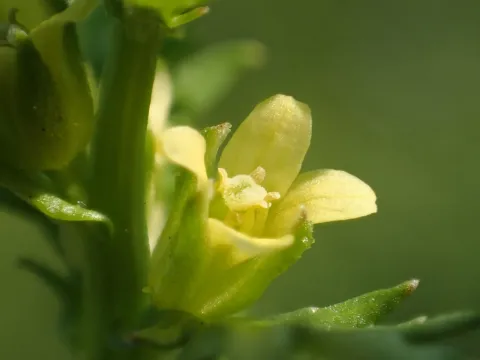
Canton cress
Rorippa cantoniensis
Canton cress belongs to the genus Rorippa within the Brassicaceae family. In its natural range, sowing is typically carried out in early spring once the soil temperature reaches approximately 10–12°C.
What the section contains
Canton cress
The plant prefers to be sown directly into the ground at a shallow depth of no more than 1–1.5 cm. Maintaining consistent soil moisture during the first 10–14 days after planting is crucial for uniform germination.
When using the transplant method, seeds are started in trays about a month before the planned field transfer. This approach allows for better control over plant density and ensures the development of a strong root system during early stages.
In commercial farming, rows are spaced approximately 20–25 cm apart. This planting pattern facilitates mechanized maintenance and ensures adequate airflow throughout the crop canopy.
The optimal timing for subsequent sowings depends on day length and air temperature. The crop is sensitive to extreme heat; therefore, mid-summer plantings may require shading to prevent premature bolting.
Canton cress is a moisture-loving crop that requires consistent water availability throughout its entire growth cycle. Ideal cultivation sites are well-drained but permanently moist soils rich in organic matter.
The plant shows high adaptability to various soil types, though loam soils with a neutral or slightly acidic pH (6.0–7.0) are preferred. Excess soil acidity can negatively affect growth rates and nutrient uptake.
Temperature management is critical for the metabolic processes of the cress. The plant develops best in moderate temperatures ranging from 15°C to 22°C. Sharp temperature fluctuations and late night frosts may lead to stunted development of the leaf rosette.
Agronomic practices include regular application of nitrogen fertilizers, as the primary marketable product consists of succulent leaves. Balancing nutrient elements is essential to avoid nitrate accumulation in the foliage.
Light exposure is a key success factor. While the crop can tolerate light shade, moderate direct sunlight during morning hours is required to achieve high yields and develop the characteristic flavor profile of the leaves.
The productivity of Canton cress depends on the quality of the seed stock, implemented agronomic practices, and specific climatic conditions of the season. When all requirements are met, leaf biomass yields can reach high levels.
The marketable mass consists primarily of the basal leaf rosettes. Yield is typically measured by the weight of harvested greens per square meter, which increases significantly under intensive management practices.
A key factor in increasing yield is timely weeding and inter-row cultivation. Competition with weeds during the early weeks significantly reduces the potential for full rosette development.
The use of mulch helps retain soil moisture and suppress weed growth, indirectly contributing to higher marketable output. This is particularly beneficial in regions prone to dry weather conditions.
If multiple harvests per season are desired, a gentle clipping method of the outer leaves is practiced while leaving the growth point intact. This allows the plant to regenerate and provide secondary harvests throughout the growing cycle.
The primary threats to Canton cress are pests specific to the Brassicaceae family, such as flea beetles. These insects can cause significant damage to young seedlings in a very short amount of time.
Among diseases, fungal infections like clubroot and powdery mildew are the most common. These thrive under conditions of high air humidity and poor ventilation within the crop canopy.
Prevention includes strict crop rotation practices, where Canton cress is not planted in the same field for at least 3–4 years. It is not recommended to plant it immediately following other members of the cabbage family.
Biological control methods are preferred over chemical pesticides, as the leaves are consumed fresh. Using agricultural fleece on early-stage crops provides effective protection against various insect pests.
Regular crop monitoring is essential, especially during humid periods, as these conditions create the perfect environment for pathogen proliferation and rapid pest population growth.
Harvesting of Canton cress is performed when plants reach technical maturity. This usually occurs when the rosette has formed a sufficient number of large, succulent leaves.
The optimal time for harvesting is early morning, when plant tissues are fully saturated with moisture and maintain maximum turgor. This ensures better shelf life and visual appeal after transport and storage.
Tools used for harvesting must be sharp to avoid crushing the stem or damaging the central growth point of the rosette. Cutting is done 2–3 cm above the soil surface unless the entire plant is being removed.
Immediately after harvest, the greens should be cooled rapidly to halt transpiration processes and preserve nutritional value. Storage temperatures should be maintained between 0–2°C with high relative humidity.
Transporting harvested produce is done in perforated containers to allow for ventilation. It is important to avoid prolonged exposure to direct sunlight after cutting to prevent rapid quality degradation.