
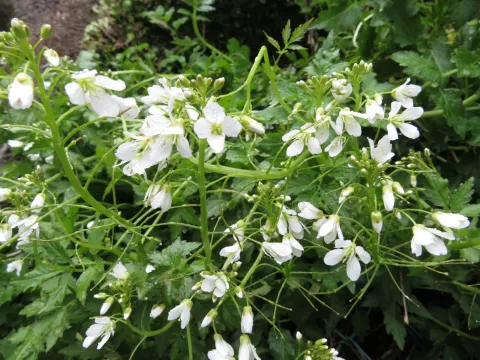
Cardamine appendiculata
Cardamine appendiculata
Cardamine appendiculata is a perennial herb belonging to the Brassicaceae family. It is native to the Far East, particularly regions like Japan, where it typically colonizes wet, shady forest habitats near streams or damp clearings.
What the section contains
Cardamine appendiculata
The plant is botanically recognized by its characteristic appendages at the base of the leaves and its slender stems. It produces small, white, or pale-colored flowers arranged in racemes, which are highly typical of the genus Cardamine, reflecting its common association with other bittercress species.
Regarding climate requirements, this species thrives in cool, humid environments with minimal direct solar exposure. It is highly intolerant of drought, making constant soil moisture and atmospheric humidity essential for its survival and vegetative growth throughout the season.
The ideal soil conditions for this plant include a high organic matter content, slightly acidic to neutral pH levels, and excellent water retention. Agricultural management focuses on creating microclimates that prevent soil evaporation and ensure that the root zone remains consistently hydrated.
While often treated as a wild botanical resource, cultivation of Cardamine appendiculata for research or small-scale apothecary use requires careful monitoring of light and water levels. Providing adequate shade and mulch is the primary strategy to maintain a healthy population in controlled or garden settings.