
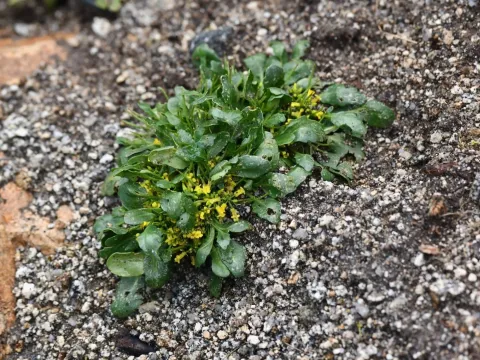
Rock yellowcress
Barbarea rupicola
Barbarea rupicola is a resilient perennial herbaceous plant belonging to the Brassicaceae family. Planting is typically scheduled for early spring, once the soil has warmed sufficiently to support germination and rapid root establishment.
What the section contains
Rock yellowcress
Seeds should be sown at a shallow depth of approximately 1 to 2 centimeters to ensure adequate contact with the soil while allowing sufficient light for emergence. Row spacing of 30 to 45 centimeters is recommended to facilitate proper air circulation and weed control.
Sufficient soil moisture immediately following the sowing process is crucial for uniform germination. In arid regions, light irrigation may be necessary to prevent the topsoil from crusting, which would hinder seedling development.
Autumn sowing is only viable in mild climates where the plant can establish a robust rosette before the first hard frost. This timing allows for early spring development, maximizing the growing season for seed production.
Proper seedbed preparation, including tillage and leveling, significantly improves yield outcomes. A firm, weed-free surface ensures that seeds are not buried too deeply by rain, contributing to consistent crop stands.
As the name implies, rock yellowcress thrives in well-drained, slightly rocky, or sandy soil. It is intolerant of waterlogging, which often leads to root rot and poor plant vigor, necessitating careful site selection.
This crop requires full sun exposure to reach its maximum photosynthetic potential. Plants grown in shaded environments exhibit stunted growth and decreased essential oil accumulation, impacting their ultimate quality.
The plant is highly frost-tolerant and adapted to harsh environmental conditions. Its ability to survive extreme temperature fluctuations makes it an excellent candidate for cultivation in higher altitudes or northern regions.
Neutral to slightly alkaline pH levels are ideal for nutrient uptake. Growers should perform a soil test to determine the necessity of lime amendments, especially if the ground is naturally acidic.
Balanced fertilization, particularly with an emphasis on potassium and phosphorus, supports root development and overall plant endurance. Nitrogen application should be moderate to avoid excessive vegetative growth at the expense of floral development.
Flea beetles are the most prominent pest, capable of decimating young seedlings within a short period. Integrated pest management, including floating row covers, is often used to mitigate damage in the early stages of growth.
The rape blossom beetle targets reproductive buds, potentially causing significant yield losses. Monitoring for the presence of these beetles during the pre-flowering phase is essential for timely intervention.
Fungal pathogens such as clubroot can persist in the soil if proper crop rotation is neglected. Rotating Barbarea rupicola with non-brassica species is critical to preventing the buildup of soil-borne diseases.
Slugs and snails may damage foliage in damp conditions, often requiring manual monitoring or organic bait applications. Maintaining clean field borders can help reduce the pressure from these mollusks.
Infection by downy mildew can occur if air circulation is inadequate. Ensuring that plants are not overcrowded is a fundamental agricultural practice to keep the canopy dry and suppress the spread of fungal spores.