
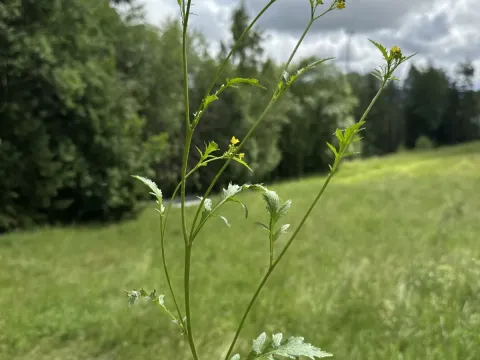
Rorippa anceps
Rorippa anceps
Rorippa anceps, commonly known in botanical terms as a species within the Brassicaceae family, is a perennial herbaceous plant adapted to specific wetland environments. It is often regarded in agricultural contexts as an opportunistic species that colonizes damp soils.
What the section contains
Rorippa anceps
The native range of this plant encompasses various regions of Eurasia, where it thrives along riparian zones, marshes, and periodically flooded grasslands. Its distribution is closely linked to its ability to survive in environments where anaerobic soil conditions often hinder other species.
Botanically, it features a creeping or ascending stem structure with serrated leaves typical of the mustard family. Its root system is exceptionally robust, allowing for rapid vegetative spread, which is a key factor in its dominance within suitable ecological niches.
The environmental requirements for Rorippa anceps are focused on moisture availability. It grows best in nutrient-rich silt or loam soils that maintain high water capacity throughout the growing season, showing high sensitivity to prolonged dehydration of the root zone.
While not a primary crop, its biological characteristics make it an object of study for phytoremediation potential in certain contexts. However, its management in farmland is largely focused on suppression to prevent competition with more sensitive agricultural yields.
The plant is frequently targeted by flea beetles (Phyllotreta spp.), which specialize in feeding on members of the Brassicaceae family. These pests can cause significant defoliation, particularly during the early stages of spring development when the plant is most vulnerable.
Fungal pathogens such as white blister rust (Albugo candida) represent a major threat under conditions of high humidity and moderate temperatures. These infections create pustules on the foliage, which can lead to reduced vigor and structural damage to the stems.
Aphid infestations are a common issue, serving as both a direct drain on plant sap and a vector for various mosaic viruses. Protecting the plant or managing its populations requires careful observation of aphid colonization patterns during the peak growing months.
Control strategies in professional agriculture prioritize mechanical weeding and deep cultivation to break the plant's extensive rhizome networks. Chemical management involves the use of systemic herbicides applied during the rosette stage for maximum efficacy.
Despite these threats, Rorippa anceps displays remarkable resilience. Its ability to regenerate from small rhizome fragments makes it a persistent presence in agricultural landscapes, requiring consistent monitoring to maintain desired field hygiene.