
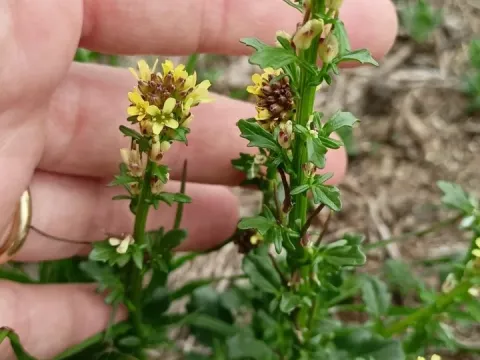
Bracteated wintercress
Barbarea bracteosa
Barbarea bracteosa, commonly known as bracteated wintercress, belongs to the Brassicaceae family and is recognized for its agricultural potential. Sowing is best performed in early spring when the soil starts to warm up.
What the section contains
Bracteated wintercress
The seeds should be sown at a shallow depth of approximately 1 to 2 centimeters to ensure rapid and uniform germination. Soil moisture at the time of sowing is critical for successful crop establishment.
Row spacing typically ranges between 15 and 20 centimeters, which allows for optimal plant density and simplifies potential weed control measures. Proper preparation of the seedbed is essential.
Using certified seeds with high germination energy is a recommended practice for all growers aiming to maximize the yield potential of this crop.
The crop establishes well in cool temperatures, making it a viable option for regions where early spring conditions are variable and unpredictable.
This crop thrives in fertile, well-drained soils with a near-neutral pH level. It shows high adaptability to various soil types, provided that waterlogging is avoided during the active growth stages.
Barbarea bracteosa requires consistent moisture throughout its growth cycle, particularly during the transition from vegetative growth to the flowering phase.
Sunlight is a key environmental factor for the development of the plant; thus, open fields with full sun exposure are highly recommended for the best performance.
Nutrient management should focus on balanced NPK fertilization to support both leaf production and seed development. Micronutrients may be beneficial if soil tests indicate any deficiencies.
The plant is known for its hardiness, showing significant tolerance to cold temperatures, which makes it suitable for northern agricultural zones.
Flea beetles represent the primary pest risk, specifically during the initial seedling stage. Growers must monitor the crop closely to prevent significant damage to young leaves.
The pollen beetle can pose a threat during the bud stage by feeding on floral tissues, which may result in a reduction of the overall seed yield.
Fungal diseases like alternaria leaf spot can occur under conditions of high humidity. Proper airflow through the crop canopy and crop rotation help mitigate this issue.
Implementing a strict crop rotation program is necessary to prevent the accumulation of soil-borne pathogens and pests specific to the Brassicaceae family.
Integrated pest management strategies should be prioritized, focusing on cultural practices that naturally suppress pest populations and promote plant health.