
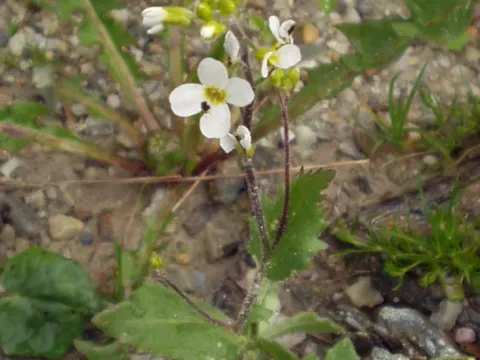
Arabis
Arabis
Arabis, commonly known as rock cress, can be propagated through seeds or vegetative methods such as stem cuttings or division. Direct sowing in open ground is best performed in early spring or late autumn.
What the section contains
 Alpine rockcress
Arabis alpina L.
Alpine rockcress
Arabis alpina L.
 Arabis caucasica
 Willd.
Arabis caucasica
Arabis caucasica Willd.
 Arabis procurrens
 Waldst. & Kit.
Arabis procurrens
Arabis procurrens Waldst. & Kit.
 Arabis scopoliana
 Boiss.
Arabis scopoliana
Arabis scopoliana Boiss.
 Arabis sturii
Arabis x sturii hort. ex S. Arn.
Arabis sturii
Arabis x sturii hort. ex S. Arn.
 Arends Rockcress
Arabis x arendsii H. R. Wehrh.
Arends Rockcress
Arabis x arendsii H. R. Wehrh.
 Coast rockcress
Arabis blepharophylla Hook. & Arn.
Coast rockcress
Arabis blepharophylla Hook. & Arn.
Arabis
When starting seeds indoors, use shallow trays filled with a well-draining soil mix. Sow the seeds on the surface, as they require light to germinate, and cover them with a very thin layer of substrate.
Maintain an ambient temperature of approximately 20 degrees Celsius. Seedlings usually emerge within two to three weeks; once they develop true leaves, they are ready for hardening off.
Transplanting into the garden should be done carefully to protect the delicate root system. Space the plants about 30 centimeters apart to allow enough room for natural spreading and air circulation.
Division of mature plants is recommended every few years to keep the patches healthy and vigorous, as older centers may become bare and woody over time.
Arabis is a genus of flowering plants belonging to the Brassicaceae family. It is widely recognized for its vibrant, carpet-forming growth habit, making it an ideal choice for rock gardens.
The primary requirement for successful cultivation is excellent soil drainage. Arabis thrives in sandy or gritty soils that prevent water from sitting around the crown and roots.
Full sun is essential for the plant to reach its full potential. While some species can tolerate partial shade, they will exhibit significantly more compact and floriferous growth in direct sunlight.
The plant is highly frost-hardy and does not require winter protection in most temperate regions. It adapts well to various climatic conditions, provided the site is well-drained.
Watering should be balanced. While established plants are relatively drought-tolerant, they appreciate regular moisture during prolonged dry spells to keep the foliage lush and green.
Fungal issues such as downy mildew and botrytis are common threats to Arabis when grown in conditions with poor airflow or consistently damp foliage during humid summers.
Crucifer flea beetles are the most notorious pests for plants in the Brassicaceae family. They create small, shot-like holes in the leaves, which can weaken the overall vigor of the plant.
Root rot is almost exclusively caused by poorly draining soil. To prevent this, ensure that the planting site has a gravel layer or elevated position to facilitate quick water runoff.
Monitoring the plants for aphid infestations is also necessary, particularly in the spring when new, tender shoots appear. Early detection helps in managing the population before it causes damage.
Sanitation practices, including the removal of dead foliage after flowering, significantly reduce the risk of overwintering pathogens and pests within the garden beds.