
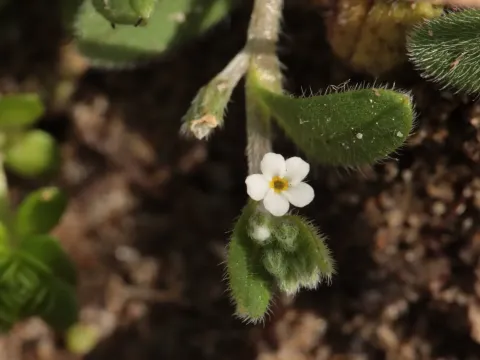
Tiny forget-me-not
Myosotis pusilla
The tiny forget-me-not (Myosotis pusilla) is a miniature herbaceous plant belonging to the Boraginaceae family. Characterized by its diminutive stature and specific ecological preferences, it stands out as a unique member of the genus Myosotis, often found in specialized botanical collections.
What the section contains
Tiny forget-me-not
In its natural habitat, the plant typically occupies rocky crevices or scree slopes where soil is sparse but well-drained. This adaptation allows it to thrive in conditions where competition from larger flora is significantly restricted, emphasizing its status as a specialized species.
Cultivation of this species requires meticulous attention to substrate composition. The ideal growing medium is a loose, gritty, and mineral-rich mix that ensures rapid water drainage. Heavy organic-rich soils must be avoided as they often lead to root asphyxiation and subsequent plant death.
Environmental requirements prioritize cool, ambient temperatures and protection from harsh direct sunlight. In an agricultural or garden setting, a semi-shaded position is essential, as the delicate foliage is highly susceptible to scorching and rapid dehydration during the height of the summer.
The biological cycle of Myosotis pusilla is geared toward short-term vegetative growth and flowering. Maintenance includes providing consistent but moderate moisture, ensuring that the root zone remains cool without being waterlogged, which is critical for the long-term survival of the plant.
The primary threats to Myosotis pusilla include fungal infections that flourish in poorly ventilated and overly humid environments. Powdery mildew is a significant risk, particularly during periods of high humidity, which can quickly degrade the visual appeal and health of the plant.
Root rot, often caused by stagnant water, represents the most severe threat to the plant's survival. Pathogens such as Pythium can compromise the root system rapidly if the drainage capacity of the growing medium is insufficient during rainy spells.
Pests such as slugs and snails are particularly drawn to the small, tender leaves of the plant. These mollusks can cause extensive damage to the rosettes, sometimes consuming the entire plant if left uncontrolled, especially in damp conditions.
Management of these threats involves proactive monitoring and the application of fungicides when conditions favor fungal spread. Improving air circulation around the plants is an essential cultural practice to reduce the incidence of leaf and root diseases.
To mitigate pest damage, growers often utilize copper barriers or organic slug deterrents. Additionally, keeping the immediate area around the plant clean of debris helps in reducing hiding spots for slugs and limits the moisture-retaining surface area that promotes fungal growth.