
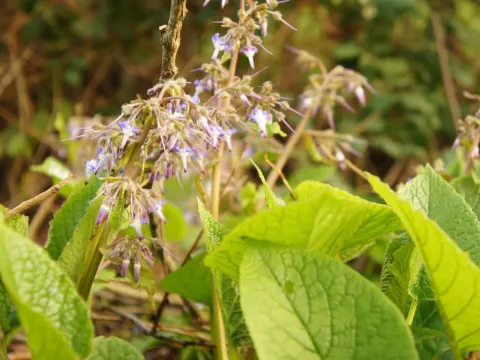
Trachystemon
Trachystemon
Trachystemon is propagated mainly through seeds or vegetative division of rhizomes, which is the most reliable method for expanding your planting area.
What the section contains
Trachystemon
Seeds require a period of stratification to break dormancy, so sowing them in late autumn ensures they undergo the necessary cold treatment during the winter.
For spring sowing, seeds should be kept in cold storage for several weeks before being planted to simulate winter conditions and improve germination rates.
Rhizome division should be performed in early spring or autumn, spacing the transplants at least 50 cm apart to allow for the plant's natural spread.
After planting, the soil should be kept consistently moist and mulched to prevent weeds from competing with the young, slowly establishing plants.
Trachystemon belongs to the Boraginaceae family and thrives in shaded, cool, and moist forest-like environments, making it ideal for woodland gardens.
The ideal soil is rich in organic matter, loose, and well-drained, as the plant dislikes heavy clay that stays waterlogged for extended periods.
Watering is critical, especially during the first growing season and during any dry spells, as the plant's large leaves lose moisture rapidly.
The plant is highly winter-hardy and adapts well to temperate climates, provided it is protected by mulch or snow cover during extreme frost.
While it prefers shade, it can tolerate dappled light, though direct intense sunlight should be avoided to prevent leaf scorching and desiccation.
Trachystemon is highly valued as an early spring honey plant, providing crucial nectar for bees when very few other sources are available in the landscape.
The lush foliage provides significant biomass, which can be utilized as a decorative ground cover that suppresses weed growth effectively.
While not a primary commercial crop, its young leaves are edible and can be harvested in early spring for use in traditional regional cuisines.
Productivity is maximized in dense, established stands where the plant has formed a solid carpet, increasing the overall nectar production per square meter.
Proper management of the planting site ensures long-term yields of both honey-bee forage and biomass without the need for frequent replanting.
Trachystemon is generally robust, but slugs and snails can be significant pests, particularly during wet springs when they feed on the succulent leaves.
Overly damp and poorly aerated soils can lead to root rot, causing the plant to wilt and decline if drainage is not properly managed.
There are no major insect or disease threats that typically wipe out Trachystemon, making it a low-maintenance perennial for the garden or farm.
Preventative measures include ensuring good air circulation around the plants and avoiding excessive overhead irrigation in the evenings.
If fungal infections occur, removing the affected foliage and improving drainage is usually sufficient to control the spread of the pathogen.
Harvesting for culinary use should focus on young, tender leaves collected in early spring before the plant puts all its energy into flowering.
Care should be taken when harvesting foliage to ensure the rhizomes remain intact, allowing the plant to regrow for future harvests within the same season.
Seed collection involves gathering the pods once they have turned brown but before they naturally dehisce and disperse their seeds on the ground.
Collected seeds must be dried thoroughly in a cool, ventilated area to ensure they remain viable throughout the storage period until the next sowing season.
Honey production is harvested by beekeepers during the peak bloom, which generally occurs in the early spring months as the plants emerge from dormancy.