
Trailing heliotrope
Heliotropium supinum
Description
Growing requirements
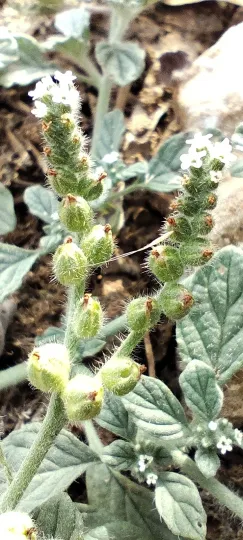
Trailing heliotrope (Heliotropium supinum) is an annual herb within the Boraginaceae family. It is characterized by its prostrate stems that spread along the ground, often forming dense mats that cover significant soil surface areas.
The plant originates from Mediterranean climates and is well-adapted to hot, arid, or semi-arid environments. It thrives in open, sunny locations with loose soil structures, including sandy loams and disturbed gravelly terrains.
Soil requirements for this species include good drainage and adequate aeration. While it is not strictly demanding regarding fertility, it benefits significantly from high light intensity, which promotes rapid growth and extensive branching.
Water requirements are relatively low compared to many commercial crops, as Heliotropium supinum utilizes deep taproots to access moisture during dry spells. However, it cannot tolerate waterlogging or high levels of soil compaction.
Agricultural distribution of this species is largely influenced by human activity, as seeds are easily transported via farm machinery. Managing its presence requires an understanding of its reproductive cycles and preference for degraded soils.
Main diseases and pests
One of the primary threats posed by Trailing heliotrope is its capacity to host pathogens that cause yellowing and necrosis in various pulse and cereal crops. It serves as an asymptomatic reservoir for several plant viruses.
Various insect pests, including aphids and specialized coleopterans, utilize this plant throughout its growing season. This population density can lead to sudden infestations in adjacent crop rows if not controlled.
Fungal pathogens such as powdery mildew can affect the foliage of H. supinum during humid conditions, creating a source of inoculum that can spread rapidly throughout a commercial field.
Control of this species is difficult due to its prostrate growth form, which allows it to evade some types of mechanical weeding tools. Effective management requires combining physical and chemical strategies early in the season.
- Integration of pre-emergent herbicides to prevent seed germination.
- Implementation of crop rotations to disrupt the survival cycle.
- Manual removal of patches before flowering to prevent seed bank replenishment.