
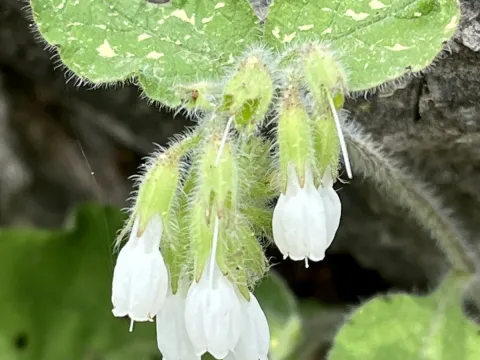
Symphytum brachycalyx
Symphytum brachycalyx
Symphytum brachycalyx is a hardy perennial belonging to the Boraginaceae family, prized for its vigorous growth and adaptability. Propagation is typically achieved through seeds, which require a cold stratification period to break dormancy and ensure uniform germination in the spring.
What the section contains
Symphytum brachycalyx
Vegetative propagation using root cuttings is the preferred method for establishing uniform plantations. Cuttings of 10–15 cm length should be buried in fertile soil at a depth of 8–10 cm, ensuring they are placed in a soil rich in organic matter to encourage rapid root initiation.
When planning a field, spacing is crucial due to the plant's large, broad leaves and extensive root system. A row spacing of 70 cm and an in-row spacing of 50 cm provide sufficient room for mechanical cultivation while maximizing biomass production per unit area.
Planting is best performed in early spring or mid-autumn when soil moisture levels are optimal. This timing allows the root systems to establish firmly before the onset of summer heat or winter dormancy, significantly improving the survival rates of young plants.
The site selection should prioritize permanent locations, as the plant’s deep, persistent roots make it difficult to relocate once established. A well-drained but moisture-retentive site is essential to support the vigorous growth of this nutrient-demanding species.
This species thrives in deep, fertile soils with a high moisture capacity. While it prefers neutral to slightly acidic soil, it is remarkably adaptable and can tolerate varied soil conditions, provided that organic nutrients are available to support its rapid leaf production.
Symphytum brachycalyx requires significant sunlight for optimal photosynthetic efficiency. Although it can endure partial shade, excessive cover will lead to etiolated stems and a lower nutrient density in the harvested forage or medicinal materials.
Water management is a key aspect of cultivation. The plant has high water requirements during the peak growing season; therefore, supplemental irrigation may be necessary in regions prone to summer droughts to maintain the quality and volume of the green biomass.
The plant demonstrates excellent winter hardiness, surviving temperatures well below freezing, provided it is protected by a mulch layer or existing snow cover. It is an ideal candidate for climates with distinct seasonal changes where early spring regrowth is desired.
Regular maintenance involves keeping the rows clear of competitive weeds, especially during the first year of growth. Once established, the dense canopy of the plant is usually sufficient to suppress most weeds, reducing the need for chemical or mechanical weeding.
The yield of green biomass is remarkably high, often allowing for multiple cuts within a single growing season. For optimal nutrient content, the plant should be harvested before the flowering stage, when the nitrogen and protein levels in the leaves are at their highest.
Sustainable harvesting practices involve allowing the plant to recover between cuts. Leaving at least 10–15% of the leaf surface area intact ensures that the plant has enough energy reserves to regenerate rapidly for the subsequent harvest cycle.
In addition to its role as a forage crop, the plant is highly valued for its nutrient-rich biomass. When used as a liquid fertilizer or mulch, it provides significant levels of potassium and nitrogen to soil, enhancing the performance of other horticultural crops.
Root yield for medicinal or botanical purposes is generally assessed after 3–4 years of growth. Harvesting roots requires careful manual labor to ensure the integrity of the root system and to minimize soil disturbance that could affect neighboring plants.
Consistent productivity over several years is achievable with balanced fertilization. Incorporating compost or well-rotted manure into the soil surface each spring helps maintain soil structure and supports the sustained vitality of the perennial root system.
Symphytum brachycalyx is generally robust against most agricultural pests and diseases. However, in environments with poor air circulation and high humidity, powdery mildew can occur on the foliage, necessitating spacing adjustments to improve airflow.
Slugs and snails are the primary pests that may target young, succulent shoots during early spring. Biological control methods, such as encouraging natural predators or using physical barriers, are recommended to protect the integrity of the young plantations.
Root rot can be a significant issue if the planting site suffers from waterlogging. Improving soil drainage through subsoiling or the addition of coarse organic materials can effectively mitigate the risk of fungal infections in the deep-growing roots.
Mechanical damage during harvesting can introduce pathogens if the cutting tools are not properly sanitized or if the cuts are made too close to the crown. Keeping tools sharp and maintaining a proper stubble height of 5–7 cm helps prevent tissue decay.
While the plant is rarely infested by widespread agricultural insects, it is good practice to monitor for root-feeding larvae if the field was previously used for grassy or weedy crops. Proper soil preparation and crop rotation practices are the best defenses.
The primary harvest window for green mass occurs at the onset of the budding phase. Harvesting at this stage ensures the highest possible concentration of beneficial metabolites and minerals, which are critical for the plant's intended agricultural or medicinal application.
For forage production, the material can be harvested, wilted, and stored as silage or dried as hay. Because the stems and leaves contain significant moisture, mechanical drying or intensive wilting is required to achieve stable storage conditions without spoilage.
When harvesting roots for botanical processing, the operation is best conducted in late autumn or early spring. The roots are excavated, washed clean of all soil particles, and sliced into smaller segments to ensure rapid and uniform dehydration.
Storage of the dried product requires a cool, dry environment with good ventilation to prevent moisture accumulation. Protecting the harvested material from direct UV light is important for preserving the stability of the active phytochemical compounds.
Post-harvest sanitation involves removing all debris from the field to discourage the overwintering of any potential pests or diseases. A final layer of light mulch can be applied to protect the crowns and stimulate vigorous regrowth in the next agricultural cycle.