
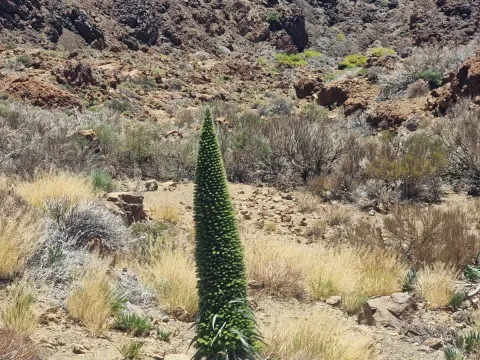
Tower of jewels
Echium wildpretii
Echium wildpretii is a biennial species that typically flowers in its second year. Seeds should be sown in early spring, preferably in a greenhouse or pots, to ensure a controlled environment for the initial stage of development.
What the section contains
Tower of jewels
The seeds require a light covering of soil, as they need a degree of light to germinate effectively. Maintaining a consistent temperature between 18 and 22 degrees Celsius is crucial for successful emergence.
Once seedlings have established, they should be transplanted carefully into a permanent, well-draining location. It is important not to disturb the primary taproot during this process, as the plant suffers from transplant shock.
In the first year, the plant focuses exclusively on building a low-growing rosette of foliage. Proper spacing of at least 70 centimeters is recommended to allow the rosette to reach its full size before winter sets in.
If sowing directly into the garden, timing is key. Seeds should be placed in areas that do not become waterlogged during the autumn or winter months, as stagnant moisture is the primary killer of this species.
Originating from the volcanic slopes of the Canary Islands, this plant belongs to the Boraginaceae family. It requires full sun exposure to thrive and develop its massive, iconic flower spike.
Soil conditions should replicate its native environment: stony, sandy, and nutrient-poor. Avoid using high-nitrogen fertilizers, as they promote excessive leafy growth and reduce the plant's structural integrity.
The species is drought-tolerant once established but needs moderate moisture during the growth phase of its first year. Ensure that the soil provides excellent aeration to prevent root rot.
Exposure to strong winds can be detrimental once the plant has grown its tall inflorescence. Planting in a sheltered but sunny spot or using support stakes is advisable in regions with heavy gusts.
The plant is not frost-hardy and should be cultivated in climates with mild winters. In areas with significant snowfall, protective mulching or container cultivation with overwintering in a greenhouse is necessary.
The Tower of jewels is highly prized in apiculture for its exceptional nectar production. The massive vertical inflorescence acts as a magnet for honey bees and other pollinators during the blooming season.
In terms of decorative output, a single mature plant can reach heights of up to 3 meters, creating a visually striking display that attracts significant attention in botanical gardens and landscapes.
Seed production is prolific in the final stages of the plant's life. Growers can harvest large quantities of viable seeds from the dried flower spikes, which can be stored in cool, dry conditions for future seasons.
While not a traditional food or fiber crop, its role in biodiversity enhancement within agricultural systems is substantial, providing critical food resources for local pollinator populations.
Commercial growers of medicinal or specialized decorative plants may also value the species for its unique phytochemical profile, although its primary agricultural value remains its pollinator support.
The most significant threat to the health of this species is root rot caused by Phytophthora or other water-borne fungi. This is primarily a result of heavy, clay-based soils that do not allow for rapid drainage.
Aphids are the most common insect pest. They often congregate on the developing flower spike, and their feeding can stunt growth and introduce viral pathogens that weaken the plant's immune system.
Powdery mildew can infect the leaves during periods of high humidity and poor ventilation. Keeping the planting area clear of debris and ensuring good airflow is the best preventative strategy.
Slugs and snails can consume young foliage rapidly during the first year of the plant's development, potentially destroying the rosette before it has a chance to mature.
Poor soil structure and lack of sunlight are indirect threats, making the plant more susceptible to opportunistic infections and reducing the overall quality of the flower spike.