
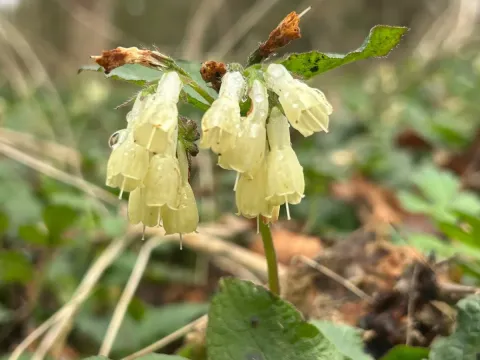
Symphytum grandiflorum
Symphytum grandiflorum
Symphytum grandiflorum, commonly known as large-flowered comfrey, is a perennial herbaceous plant belonging to the Boraginaceae family. Originally from the Caucasus region, it is valued for its hardiness and rapid establishment in various environments.
What the section contains
Symphytum grandiflorum
The crop thrives in fertile, moist, and well-drained soils. It exhibits significant shade tolerance, making it an excellent choice for agroforestry systems or intercropping beneath orchard canopies where light levels are reduced.
Botanically, it is characterized by creeping rhizomes and a deep taproot system, which allows it to access minerals from deeper soil layers, effectively serving as a nutrient accumulator.
Climatic requirements are moderate; the plant is winter-hardy and capable of enduring fluctuating temperatures. It resumes growth early in the spring, utilizing the initial soil moisture effectively.
A successful cultivation program requires attention to soil pH, preferring near-neutral levels, and ensuring that the area is clear of perennial weeds during the establishment phase.
Symphytum grandiflorum has multiple agricultural uses. Primarily, it is cultivated as a biomass producer for green manure, as its nutrient-rich foliage decomposes rapidly to improve soil quality.
In forage systems, the plant provides a valuable protein source for livestock. It is often harvested several times per season, provided it receives sufficient water to support biomass regeneration.
The plant serves as a vital early-season nectar source for bees and other pollinators, thereby supporting the biodiversity of the agricultural ecosystem and enhancing crop yields in nearby fields.
Medicinally, comfrey is noted for its high allantoin content, which is used in external treatments. However, internal use is discouraged due to the presence of pyrrolizidine alkaloids.
Landscape professionals utilize the plant for its dense ground-covering habit, which serves as a natural weed suppressor in large-scale permaculture and maintenance-free gardens.
While generally robust, Symphytum grandiflorum may encounter issues with powdery mildew, particularly in humid climates with poor airflow among the foliage.
Gastropods, such as slugs and snails, are the primary pests. They can cause significant damage to the succulent leaves, especially in moist, shaded conditions during the early growth stage.
Integrated pest management strategies should focus on thinning the plants to improve air circulation and minimizing stagnant moisture around the crown of the plant.
Root rot can occur if the site has poor drainage or if the water table is excessively high during the dormant period, potentially leading to plant loss.
Chemical control is rarely recommended; instead, farmers should prioritize cultural practices such as selecting appropriate planting sites and ensuring adequate soil drainage.